We may earn a commission if you buy through links on this page, at no extra cost to you. How this works
Derila Ergo: A contoured memory foam pillow with side wings and a removable, machine-washable cover.
See Derila Ergo on the official site60-day money-back guarantee
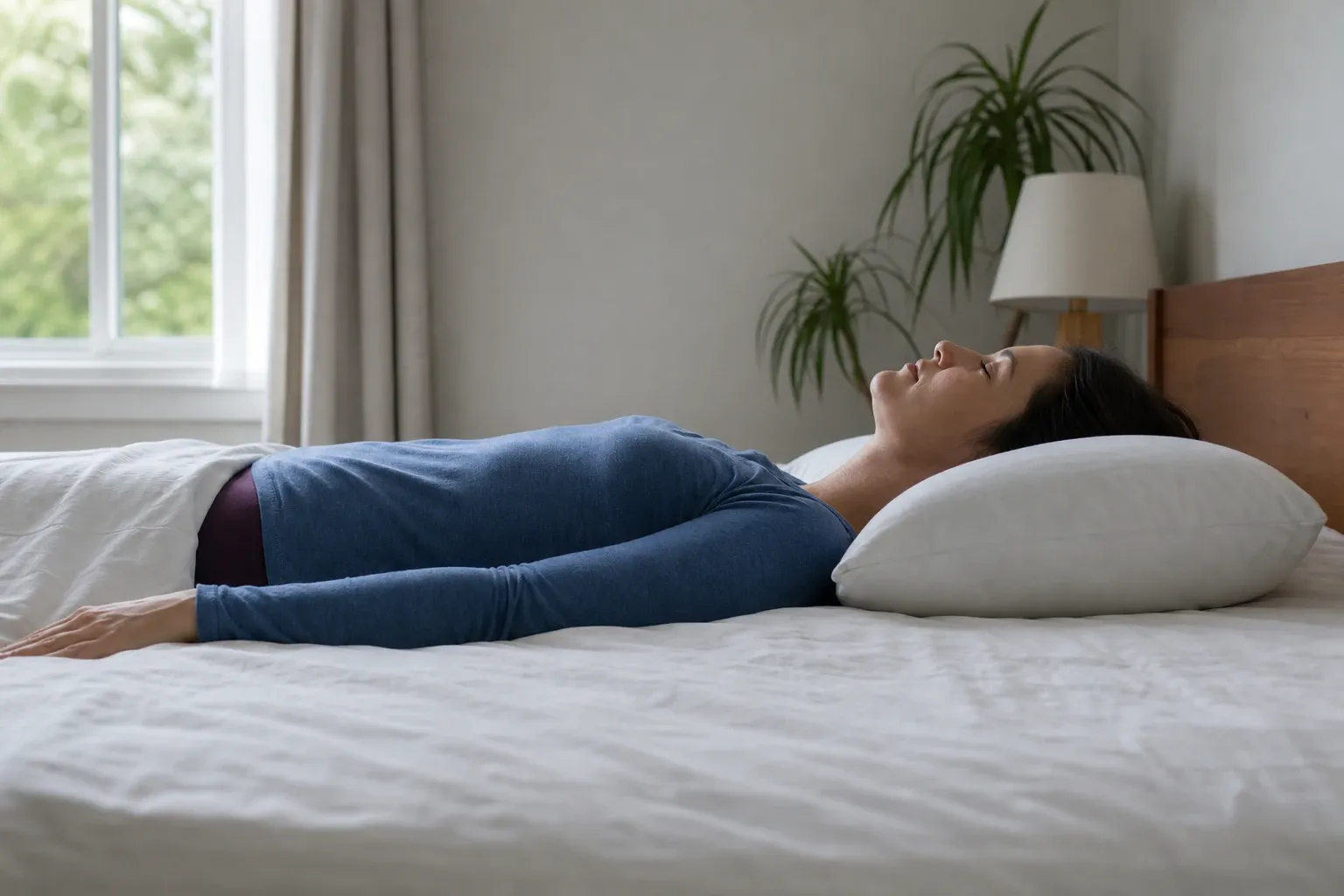
Which sleeping position is best for a sore neck?
Back and side sleeping are usually the easiest positions on a sore neck, because your head can stay in a neutral line with your shoulders. Think of your neck as a bridge between your head and your shoulders. The bridge should stay level.
Comfort differs from person to person. The best position is the one you can hold comfortably through the night.
Back sleeping
Back sleeping is a good choice for a sore neck because your head and shoulders rest evenly on the bed. It suits most people with stiffness. It’s less comfortable if you snore loudly or have breathing concerns, so see the doctor section below. Our guide on how to properly sleep on your back covers the setup in more detail.
Side sleeping
Side sleeping works well if the pillow fills the gap between your ear and outer shoulder. It’s the most common position, and it’s where pillow height matters most. A side sleeper with wide shoulders needs a taller pillow than a narrow-framed one.
Stomach sleeping
Stomach sleeping is usually the hardest on the neck, because your head stays turned to one side for hours. Many people find that irritating. If it’s your only comfortable position, the stomach-sleeping section below has ways to ease it.
How should I set up my pillow on my back?
On your back, the pillow should fill the gap under your neck and hold your head level, without pushing your chin toward your chest. A medium pillow of lower height is usually enough. Too tall, and it tips your head forward.
Here’s a simple check. Lie down and have someone glance at you, or take a quick photo from the side. Your chin should be level, not pointing up or tucked down.
- Use one pillow, not a stack.
- Let the pillow touch the curve of your neck, not just the back of your head.
- Contour pillows with a neck curve are one option.
- A small rolled towel under the neck is a cheap trial before you buy anything.
This suits back sleepers with mild morning stiffness. It isn’t a treatment for ongoing pain.
Why does my neck hurt after sleeping on my side, and how do I fix it?
Side neck soreness usually comes from a pillow that’s too flat or too tall, which tilts your head down or up all night. The fix is matching pillow height to your body.
One small study of 21 adults tested foam pillows at 5, 10 and 14 cm in side lying. The middle height was rated most comfortable and the lowest least comfortable. It involved people without neck pain, so treat it as a clue, not proof.
Pillow height for side sleepers
A side sleeper’s pillow should be about as tall as the distance from ear to outer shoulder, so the head stays level. Measure it: stand against a wall and measure from your ear to the tip of your shoulder. Compare that to your pillow’s height (its loft) when compressed. More help is in our guide to pillow height for side sleepers.
Shoulder width and mattress softness
Wider shoulders need a taller pillow, and a softer mattress needs a slightly lower one, because your shoulder sinks in. A very firm mattress pushes the shoulder up and may call for more height. If you’ve changed mattresses recently, recheck your pillow.
Arm and hug-pillow tricks
Don’t tuck your arm under the pillow, since it lifts your head and shoulder. Hug a body pillow instead. It also helps stop you rolling onto your stomach. Our page on knee and body pillows goes deeper.
Wing or contour shapes can help keep the head centered. One example is Derila Ergo, a contoured memory foam pillow with front support wings. The maker says the wings support the neck and jaw. The maker hasn’t published a study of Derila Ergo itself. Standard size is 54 x 36 x 12 cm, and the maker says to let it expand 6 to 8 hours after unpacking.
Can I make stomach sleeping easier on my neck?
Stomach sleeping can be made easier on your neck by using a very thin pillow or none, and putting a pillow under your hips. Our page on stomach sleeping and the neck has more.
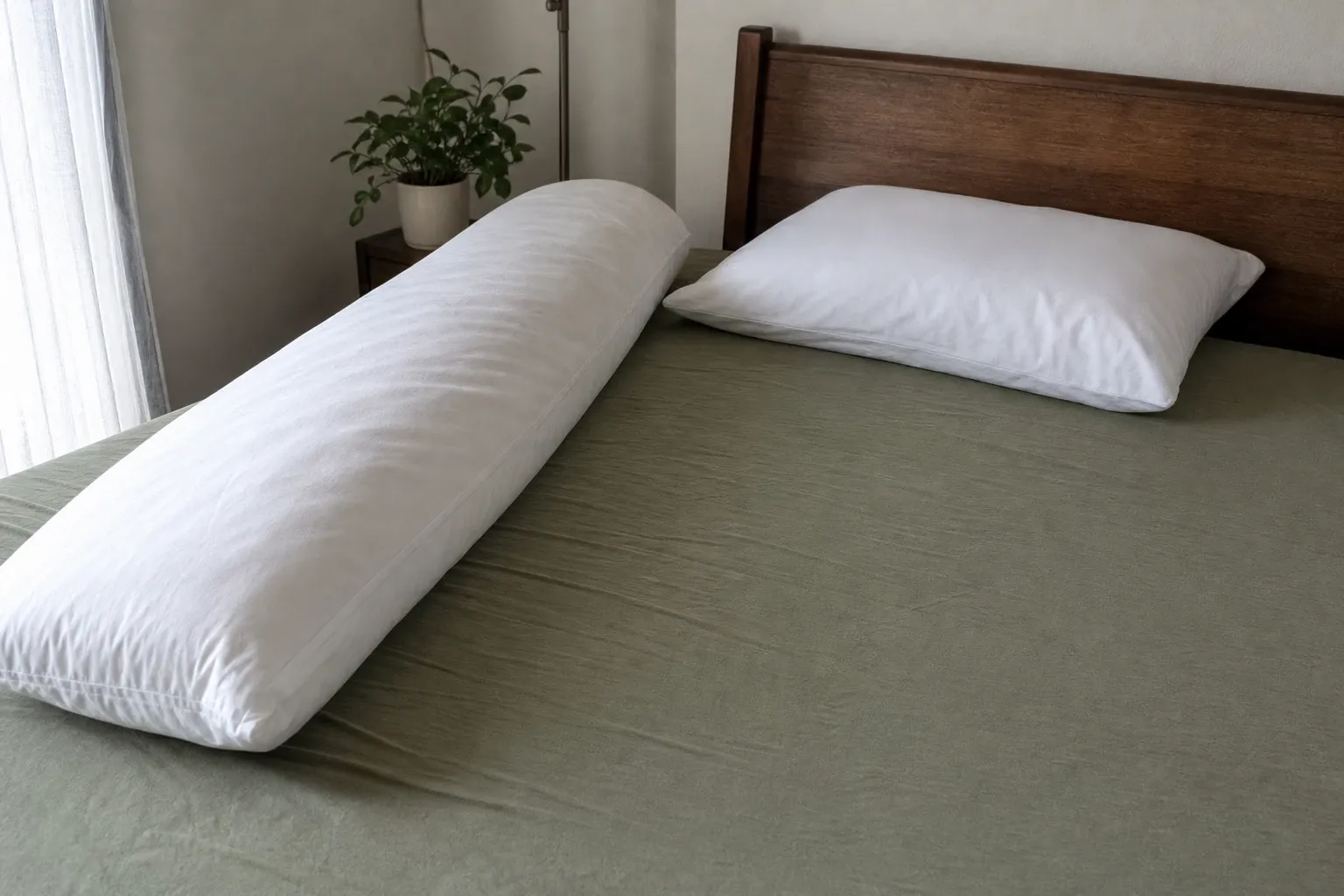
This is for people who can’t settle any other way. If you can shift, try these steps:
- Start the night on your side, hugging a body pillow.
- If you wake on your stomach, don’t fight it. Just roll back.
- Give it a week or two before judging.
If you stay on your stomach, turn your head to the other side now and then where you can. A flat pillow keeps your head from bending backward.
Quick tip: A pillow under the hips and lower belly keeps your back from arching, which can ease the pull on your neck.
Quick comparison: which position suits which person?
Back sleeping suits most people with stiffness, side sleeping suits those who can match pillow height, and stomach sleeping suits those who can’t change. Here’s the setup for each.
| Position | Neck line | Pillow height | Main tip | Watch out for |
|---|---|---|---|---|
| Back | Neutral, head level | Low to medium | Fill the gap under the neck | Too tall tips head forward |
| Side | Neutral if height fits | Medium to tall, ear-to-shoulder gap | Hug a body pillow | Too flat or too high |
| Stomach | Head turned for hours | Very thin or none | Pillow under hips | Long-held head turn |
Comfort is personal. Changing position takes patience, often a week or two, and it’s fine to move slowly. If you switch positions often, see pillows for combination sleepers.
Does the pillow matter as much as the position?
Yes, pillow height and firmness decide whether your neck stays level in any position. A great position on the wrong pillow can still leave you sore.
A review of 35 pillow trials found pillow use was linked to less neck pain, less waking pain and more satisfaction in people with long-lasting neck pain. It also suggested pillow shape and height affect neck alignment. The best results were with rubber and spring pillows, and it didn’t find better sleep quality.
Contour and cervical memory foam pillows
A contour pillow has a curve for the neck and a dip for the head. Memory foam is a slow-springing foam that softens with body heat. Some versions add side wings. The maker of Derila Ergo says its foam contours to your shape and its removable cover keeps it cool. Those are the maker’s claims. See best contour pillows for comparisons.
Signs your pillow is wrong
- You wake stiff most mornings.
- You prop your head with your hand.
- The pillow is flat or lumpy and doesn’t spring back.
When to replace or wash it
Follow the care label, air the pillow often, and replace it when it no longer holds its shape. Check when to replace pillows for a quick test.
When should I see a doctor about neck pain from sleeping?
See a doctor if neck pain lasts more than a couple of weeks, keeps getting worse, or comes with warning signs. MedlinePlus lists numbness, tingling or weakness in an arm or hand, and pain after an injury among reasons to get checked.
Get medical advice for:
- Numbness, tingling or weakness in an arm or hand
- Pain spreading into the arms
- Headaches or fever with a stiff neck
- Pain after a fall or injury
Loud snoring with gasping, pauses in breathing or heavy daytime sleepiness is a reason to ask about sleep apnea. NHLBI describes these symptoms. A pillow isn’t a treatment for that.
Position and pillow changes are comfort steps, not treatment.
Where to go next
Position and pillow work together, and our practical guide to pillows and neck comfort shows how they fit with the rest of your sleep setup. For picking a pillow once you know your position, see pillows for neck pain. If you’re curious about one contour option, the Derila Ergo maker offers a 60-day guarantee. The return needs the original packaging, and shipping costs aren’t refunded.
Check the current price and return terms on the official site.
See Derila Ergo on the official site60-day money-back guarantee
More guides in Sleeping positions
Questions readers ask
How long does it take to get used to a new sleeping position?
It often takes a week or two, and for some people longer. Change gradually: start the night in the new position and don’t worry if you drift back. Pillows and body pillows can help you stay put. If pain grows, stop and see a doctor.
Is it bad to sleep without a pillow with a sore neck?
Not always. Stomach sleepers often do fine with no pillow or a very thin one. Back and side sleepers usually need some support to keep the head level, since the gap under the neck or shoulder is unsupported. Go by comfort.
Is a rolled towel as good as a contour pillow?
A rolled towel under the neck is a cheap way to test whether neck support helps you. It can shift or flatten during the night, while a contour pillow holds its shape. No study here compares them directly, so choose by comfort and budget.