We may earn a commission if you buy through links on this page, at no extra cost to you. How this works
Derila Ergo: A contoured memory foam pillow with side wings and a removable, machine-washable cover.
See Derila Ergo on the official site60-day money-back guarantee
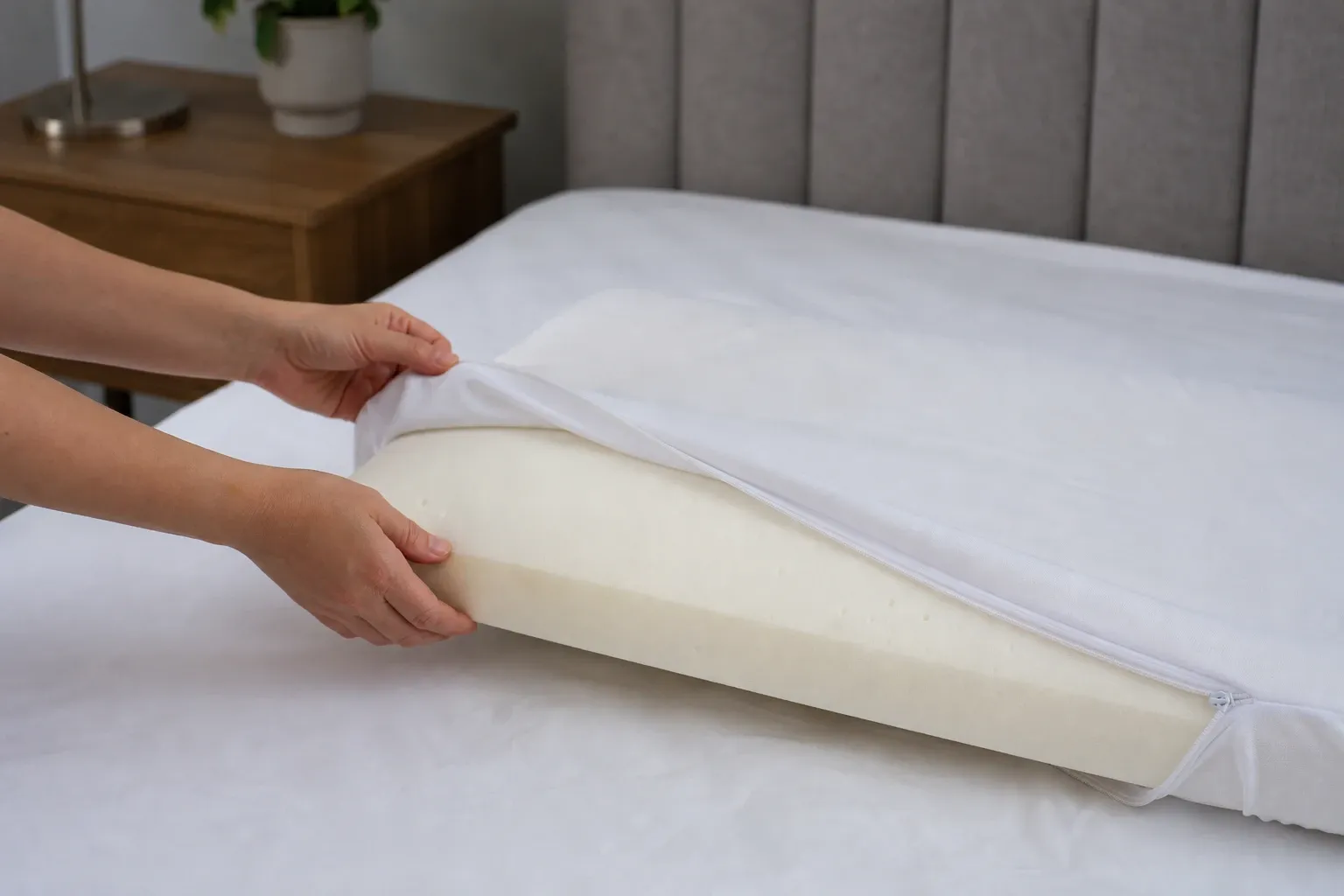
What does ‘hypoallergenic’ actually mean on a pillow label?
“Hypoallergenic” means a maker says the pillow is less likely to cause a reaction. It does not mean allergen-proof.
The word has no single legal standard that we can point to, so treat it as the maker’s claim. A pillow can wear the label and still collect dust in its cover.
Three things cause most bed-related sniffles: dust mites (tiny bugs that live in bedding), mold (which likes damp, warm spots) and dander (flakes from skin, pets or both). Dust mites feed on skin flakes, so any pillow you sleep on gives them something to work with.
Example: A pillow labeled hypoallergenic sits under a cotton pillowcase you wash twice a year. The label hasn’t helped much, because the case is where the dust lives.
Is memory foam itself hypoallergenic?
Memory foam is a fairly tough place for mites to live, but it is not allergy-proof. Dust and skin flakes still settle on its surface and cover.
Why dust mites struggle in dense foam
Dense foam leaves little room for mites to burrow, unlike loose fill. Density, the weight of foam per volume, can be a clue to quality, but it isn’t an allergy guarantee.
The research on bedding and mites is mixed. One small trial found that mite-proof encasings plus a washing routine cut mite allergen in children’s beds. A larger trial found mite-proof mattress covers did not change allergy rates in high-risk children by age 4. So fewer mites in the bed doesn’t always mean fewer symptoms.
Off-gassing, odors and chemical sensitivity
A new memory foam pillow can smell for a while because foam releases gases, called off-gassing. Lab work on crib mattresses found that new crib mattresses released more volatile compounds than used ones. That study looked at mattresses, not pillows.
If you have a sensitive nose, air the pillow in a ventilated room before first use. The smell usually fades with airing.
Where allergens still build up: the cover and the surface
The surface and cover collect dust, sweat and skin flakes. Some pillows add antimicrobial treatments, which are coatings meant to slow bacteria or mold. Read what the treatment is and ask whether it’s on the foam or cover.
Which certifications are worth checking: CertiPUR-US and OEKO-TEX?
CertiPUR-US and OEKO-TEX are both worth checking, but neither one means “allergy-proof.”
What CertiPUR-US covers
CertiPUR-US is a program for polyurethane foam. It relates to what’s in the foam and how much it gives off, not to allergy prevention.
What OEKO-TEX covers
OEKO-TEX tests textiles for certain substances. It can apply to a cover or fabric, so check which part of the pillow is covered.
What neither one promises
Neither certificate promises fewer allergy symptoms. They speak to materials, not to your nose.
A logo alone proves little. Look for a certificate number or a lookup on the certifier’s site.
Quick checklist to verify a claim:
- A certificate number you can look up
- A full material list for foam and cover
- A removable, washable cover
- A return policy and sleep trial
- A stated warranty
Memory foam, latex or down alternative: which is easier on allergies?
None is a clear winner for everyone. Each has trade-offs, and your sleep position matters as much as the fill.
| Fill | Allergen resistance | Washability | Cooling | Typical price |
|---|---|---|---|---|
| Memory foam | Dense, so mites struggle inside; surface still gathers dust | Spot clean foam; wash removable cover | Can run warm without a cooling cover | Mid range |
| Latex | Dense and mite-resistant; not for natural latex allergy | Spot clean | Often breathable | Mid to high |
| Down alternative / microfiber | Synthetic fill; no animal feathers | Often machine washable | Varies | Lower |
Memory foam
Memory foam suits people who want contour support and a pillow they don’t wash whole. Choose a cover you can remove.
Latex
Latex is a springy foam, often from rubber trees. Skip natural latex if you have a latex allergy. Our page on latex pillows for side sleepers has more.
Down alternative and microfiber
Down alternative is a synthetic fill that is often washable. It tends to flatten sooner, so you may replace it more often.
Whatever you pick, match loft (pillow height) and firmness to how you sleep. A side sleeper with wide shoulders needs more loft than a back sleeper. Allergy-friendly but uncomfortable is a bad trade.
Does the cover matter more than the foam?
The cover matters a lot, because it touches your skin and gathers dust and moisture. Damp, warm surfaces help mold and mites, so breathability counts.
Bamboo, organic cotton, silk and Tencel
Bamboo, organic cotton, silk and Tencel (a soft fabric made from wood pulp) are all common. Each is a fabric choice, not a proven allergy fix. Pick one you can wash.
Cooling covers and sweat
Cooling covers aim to keep the surface drier. The maker of one contoured pillow says its cover helps keep the pillow cool and dry. See our cooling pillow comparison for more.
Machine washable cover and fragrance-free care
Choose a zippered, machine washable cover. Use a fragrance-free detergent, since heavy scents can bother a stuffy nose.
How often should I wash and replace an allergy-friendly pillow?
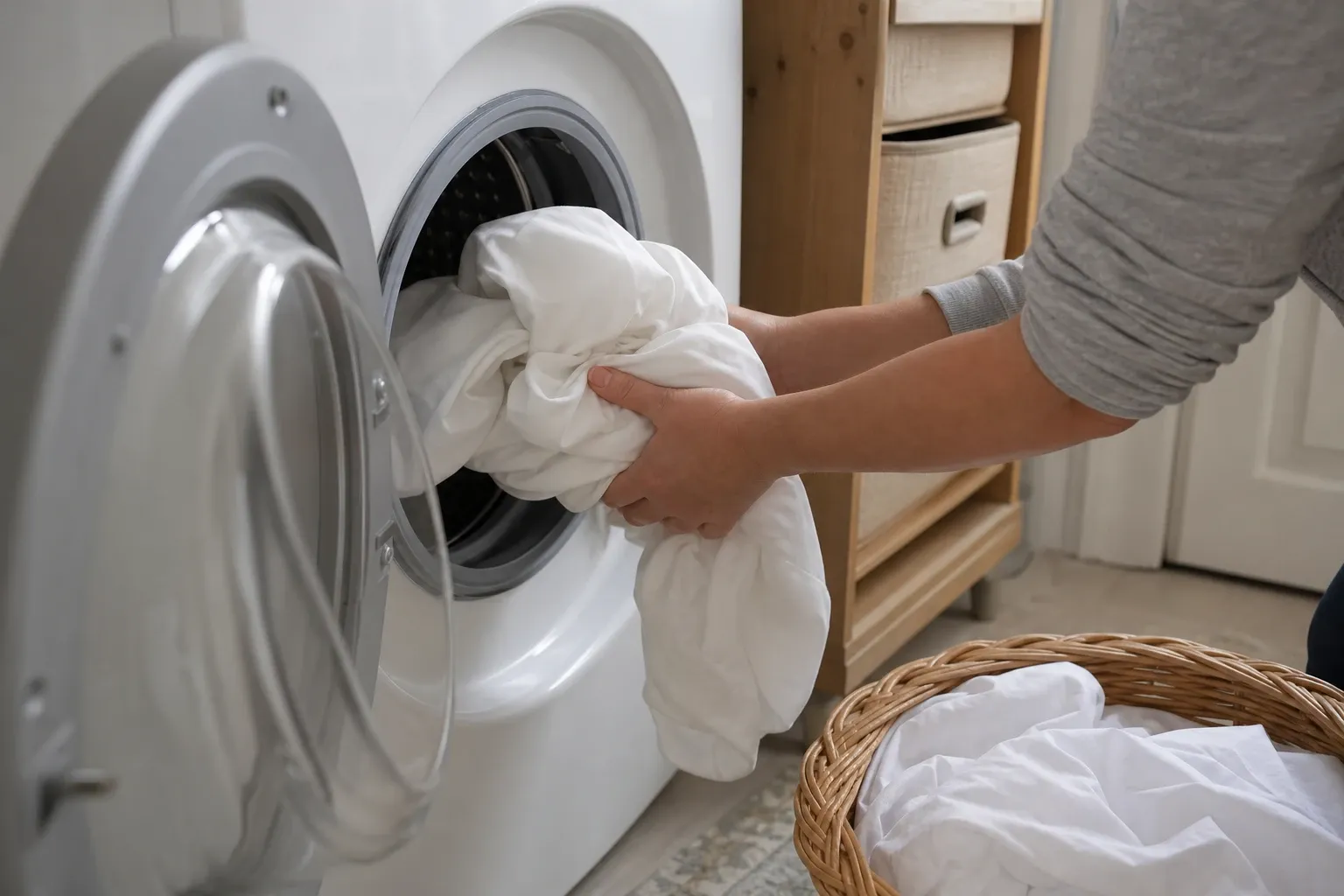
Wash the pillowcase weekly and the removable cover as its care label says. Foam usually shouldn’t go in the washer.
A simple routine
- Wash pillowcases weekly in hot water if the fabric allows.
- Use a pillow protector under the case.
- Air the foam and spot clean it. Our guide on how to clean pillows covers each fill.
- Replace it when it loses shape or smells. Makers often say every 2 to 3 years.
Bedding around the pillow
A mattress protector and regular vacuuming help. Keeping pets off the bed cuts dander. A review of trials found the evidence on mite reduction for eczema was very low quality, so treat these as sensible habits, not cures.
When should I ask a doctor about my allergies?
See a doctor if congestion, itchy eyes, sneezing or cough continue even with clean bedding.
Wheezing, breathing trouble or asthma symptoms need medical advice promptly. Snoring with gasping and daytime sleepiness also needs a check, as NHLBI describes.
A pillow is a comfort item, not a treatment. Allergy testing can find your real triggers, such as mites, mold or pets.
What to look for when shopping, and where does a contoured pillow fit?
Shop with a checklist, and know that a contoured pillow suits some side and back sleepers.
- Certificates you can look up
- Removable, washable cover
- Cooling cover if you sleep warm
- Loft for your position
- Trial period and warranty
- Price tier that fits your budget
Derila Ergo is a contoured memory foam pillow with front support wings. The maker says its materials are hypoallergenic. We can’t confirm that, so use the checklist above. The maker hasn’t published a study of Derila Ergo itself.
Facts from the maker: a removable, machine-washable cover, a 60-night trial with refund conditions (non-defective returns need the original packaging and an RMA form, and shipping costs aren’t refunded), and a single pillow at 59.99. Read our ergo memory foam pillow review for details.
Check the current price and return terms on the official site.
See Derila Ergo on the official site60-day money-back guarantee
Where does this fit in your wider pillow choice?
Allergy fit is one piece of choosing a pillow. Our guide to pillows and neck comfort shows how to weigh it with height and firmness. If you want to compare foam options, see the best rated memory foam pillow page.
Questions readers ask
Can dust mites live in memory foam pillows?
Dense memory foam gives mites little room to live inside, but dust and skin flakes settle on the surface and cover. That’s why washing the cover and pillowcase often matters more than the foam type.
Is CertiPUR-US the same as hypoallergenic?
No. CertiPUR-US relates to what’s in the foam and how much it gives off. It doesn’t promise fewer allergy symptoms. Treat it as a material check, and look for a certificate number you can verify.
Does a hypoallergenic pillow stop allergies?
No. It may be less likely to trigger a reaction, but a pillow can’t treat allergies. If sneezing, itchy eyes or congestion continue despite clean bedding, ask a doctor about allergy testing.