We may earn a commission if you buy through links on this page, at no extra cost to you. How this works
Derila Ergo: A contoured memory foam pillow with side wings and a removable, machine-washable cover.
See Derila Ergo on the official site60-day money-back guarantee
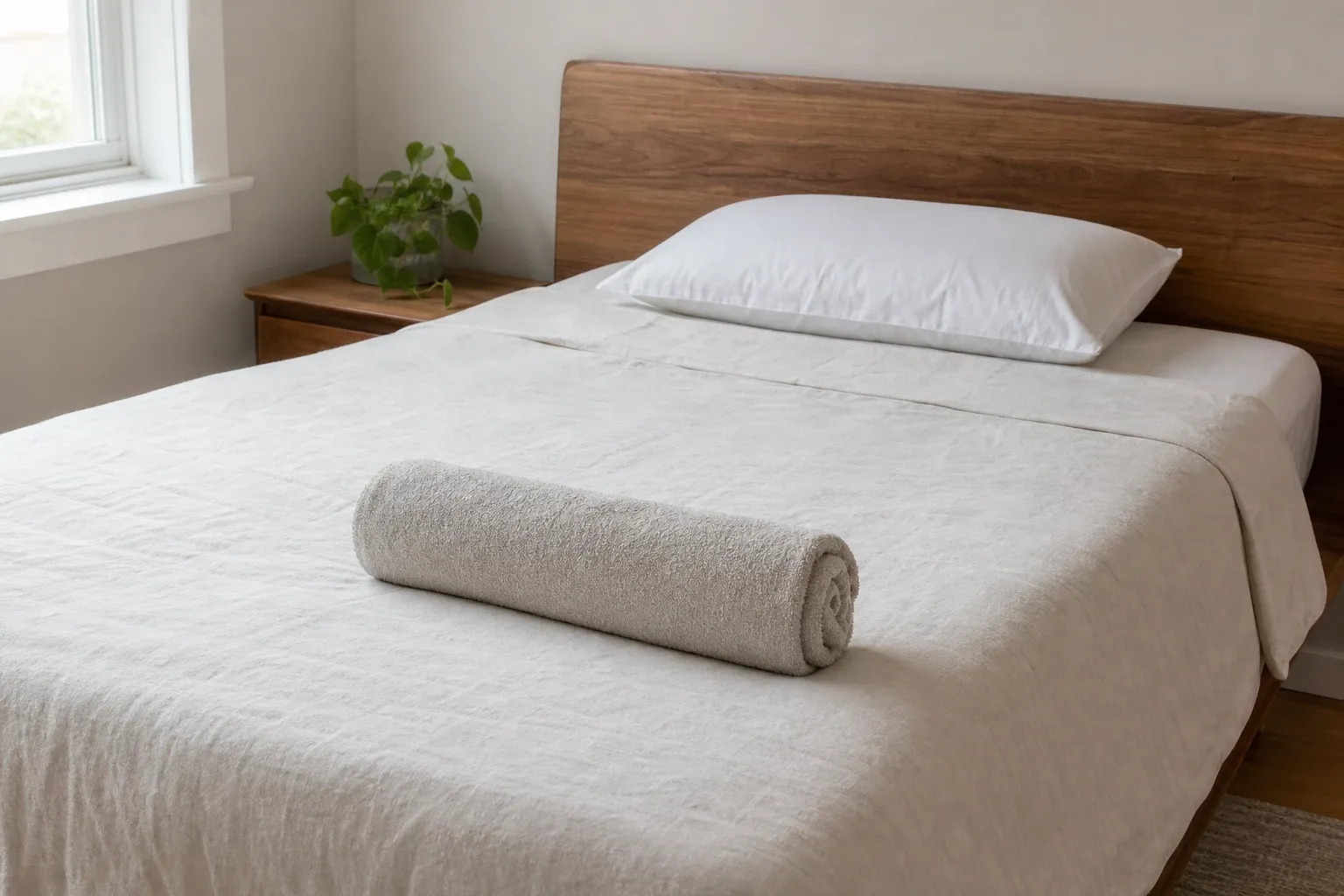
What does a comfortable back-sleeping position look like?
A comfortable back-sleeping position keeps your head level with your chest, your chin neither tucked nor tilted up, and your shoulders relaxed.
Your lower back should rest in its gentle natural curve, not flat and not arched hard off the bed. Your weight spreads over a wide area: head, shoulders, back, hips and heels. That’s why many people find the position calm once it’s set up.
Example: picture lying on your back and looking straight at the ceiling. If you’re staring at your toes, the pillow is too tall. If your forehead tips back, it’s too low.
Expect the first few nights to feel odd, especially if you usually sleep on your side or stomach. Your body is used to another shape. Give it a week or two before you judge the setup.
This guide is for side, stomach and ever-changing sleepers who want to try the back. It isn’t a fix for pain or snoring. Those go to a doctor (see the last section).
Step 1: Choose the right pillow height for your neck
The right pillow height (its loft) fills the space between your neck and the mattress without pushing your chin toward your chest.
Most back sleepers do well with a medium loft. The pillow should hold its shape instead of sinking flat under your head. For a deeper look at picking one, see our best pillow for back sleepers page and the simple method for choosing a pillow.
How to check your loft in two minutes
You can check loft by lying on your back and having someone look at you from the side, or by taking a photo.
- Lie down with your usual pillow.
- Look for a straight line from your forehead to your chest. Your face should point at the ceiling.
- If your chin tucks down, remove some height. If your head tips back, add some.
- Check that your neck feels supported, not hanging in air.
Height matters for comfort. In a small study of 21 adults, a middle pillow height (10 cm) was rated the most comfortable compared with 5 cm and 14 cm foam pillows. People were lying on their sides in that test, so treat it as a hint, not a rule for your back.
Does body size or shoulder width change the height?
Body size matters less for back sleepers than for side sleepers, but head size and upper-back shape still change what fits.
When you lie on your back, your shoulders don’t create a big gap, so you usually need less height than on your side. Someone with a rounded upper back or a larger head may need a little more. A slim person with a flat upper back may feel best with a lower pillow.
Example: if you’re a wide-shouldered side sleeper using a tall pillow, that same pillow will likely push your chin down when you roll onto your back. Plan on a lower one, or one with a lower center.
Memory foam, latex or down alternative: which feels right on your back
Each fill has trade-offs, and the best one is the one that holds your head level and stays cool enough for you.
| Fill | Support | Cooling | Price | Care |
|---|---|---|---|---|
| Memory foam | Contours and holds shape; slow to bounce back | Can feel warm unless vented or gel-style | Low to high | Spot clean; check the cover |
| Latex | Springy, firm, holds height | Often cooler, breathable | Usually higher | Spot clean; don’t wring |
| Down alternative | Soft, easy to shape; can flatten | Usually cool | Usually low | Often machine washable |
| Down | Very soft, fluffs back | Breathable, can trap heat | Mid to high | Needs gentle washing |
In a Korean survey of 332 adults, the authors suggested materials like latex or memory foam for neck support. It’s a survey, so it shows patterns, not proof.
A contoured pillow has a lower center and a raised roll for the neck. It’s one option for neck support. A small lab-style study of 20 healthy adults found that an orthopedic (contoured) pillow gave a higher cervical curve and less heat build-up than memory foam or feather pillows over 30 minutes lying on the back. It’s short and small, so it doesn’t tell us about a full night.
One example is Derila Ergo, a contoured memory foam pillow with front support wings and a removable cooling cover, sold by UAB Domestica. The maker says the wings support head and neck and that the cover helps keep it cool. The maker hasn’t published a study of Derila Ergo itself. For back sleepers, the maker’s directions say to place the back of the neck on the front curve with the head toward the center. The standard size is 54 x 36 x 12 cm, and it needs 6 to 8 hours to expand after unpacking. Our contour pillow comparison goes further.
Step 2: Support your knees and lower back
A small support under your knees lets them bend slightly, which helps your lower back rest in its natural curve.
This is for people who feel their lower back arch or tighten when they lie flat. If you feel fine flat, you can skip it.
Pillow or rolled towel under the knees
A small pillow or rolled towel under the knees works best when it bends them gently, not when it lifts them high.
Start with a rolled bath towel. Slide it just under the backs of your knees. If your heels feel stuck high, the prop is too big. Your legs should feel loose.
A firmer mattress pushes back more, so you may need a thicker roll to fill the gaps. On a softer mattress your hips sink more, so a thin roll is often enough.
When to add a small lumbar roll
A small lumbar roll, which is a thin rolled towel under your lower back, helps if a gap remains between your lower back and the mattress.
Slide your hand under your lower back. If you can fit a flat hand with room to spare, try a thin towel roll there. If your hand just fits, you don’t need it. Keep it small. A thick roll will push your back into an arch.
Quick tip: change only one thing per night, so you know what helped.
Step 3: Place your arms and shoulders
On your back, rest your arms loosely at your sides or on your belly, and keep your shoulders off the pillow.
The pillow should support your neck and head only. If it pushes up under your shoulders, your head tips forward. Slide down until your shoulders rest on the mattress.
Avoid putting your arms overhead for long stretches. It’s a common habit for side and stomach sleepers, and it can leave shoulders feeling pulled.
If your shoulders feel dragged, tuck a small pillow beside each arm. It gives the arm something to rest on, so it doesn’t drop away from your body.
Example: a former stomach sleeper who always sleeps with an arm under the pillow can hug a small pillow on the belly instead. It gives the arm a job without twisting the shoulder.
For more on how position affects comfort, see sleeping positions and neck comfort.
Back-sleeping setup checklist
This checklist puts the whole setup in order, so you can run through it in a few minutes at bedtime.
- Lie down and check that your forehead and chest form a level line.
- The pillow fills the gap under your neck, with your chin neither tucked nor tilted up.
- The pillow holds its shape and doesn’t flatten.
- Your shoulders rest on the mattress, not on the pillow.
- A thin pillow or rolled towel sits under your knees for a slight bend.
- Optional: a thin roll under your lower back if a gap remains.
- Your arms rest at your sides or on your belly, not overhead.
- A small pillow beside each arm if your shoulders feel pulled.
- On a softer mattress use a thinner knee roll; a firmer one may need a thicker roll.
- Keep the room cool and the covers light, and change one thing per night.
Quick tweaks by symptom
- Neck feels pushed forward: the pillow is too tall or under your shoulders. Lower the height and move it up.
- Lower back arches: add a thin roll under the knees, or try a lumbar towel.
- Shoulders ache: bring arms down to your sides or belly and add a small side pillow.
- Head tips back: the pillow is too low or flattened. Add height under the neck.
- Too warm: try a cooler fill or cover, and a lighter blanket.
See Derila Ergo on the official site60-day money-back guarantee
Common mistakes that make back sleeping uncomfortable
The most common mistakes are stacking pillows, using the wrong pillow for your old position, and quitting too soon.
- Stacking pillows. Stacks shift, and they lift your head too high. Use one pillow with the right loft.
- A stomach-sleeper pillow. Flat pillows leave a gap under the neck on your back.
- A side-sleeper pillow. Tall pillows tip your chin down.
- A pillow that’s too soft. If it flattens as you sleep, your head sinks. Choose one that holds shape.
- Overheating. If you wake warm, look at a cooling cover or a breathable fill. See our cooling pillow comparison.
- Giving up too soon. Allow one to two weeks, changing one thing at a time.
Example: someone moving from stomach sleeping often reaches for the same flat pillow, then wakes with the head tipped back. A medium-loft pillow often fixes that.
How do I stay on my back all night?
You can stay on your back by starting the night there and putting pillows on each side to make rolling over less likely.
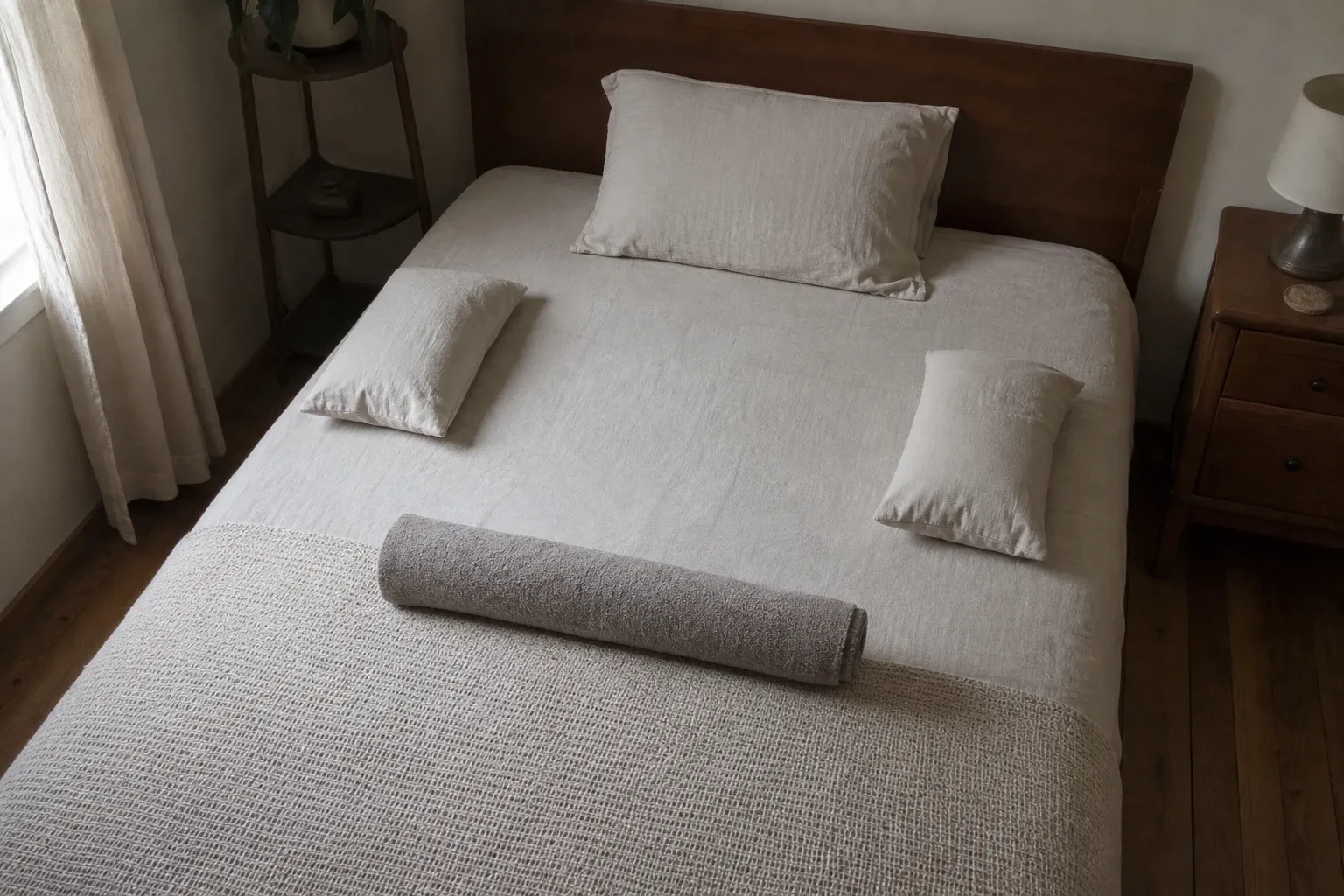
A rolled blanket or pillow on each side acts like bumpers. Some contoured pillows have wings that cradle the head, which also helps keep it centered.
You’ll likely still shift in the night. That’s normal. If you’re a combination sleeper, someone who moves between back and side, that’s fine too. Choose a pillow you can use on your back and your side, as in our combination sleeper pillow guide.
Keep the pillow in shape
Replace a pillow once it no longer holds its shape. A quick test: fold it in half. If it doesn’t spring back, or stays lumpy or flat, it’s time. Our pillow replacement guide has more.
Follow the care label. Some covers are machine washable, including the Derila Ergo cover, which the maker says is removable and machine washable warm. Foam cores generally shouldn’t go in the washer. See how to clean pillows by fill type.
When should I see a doctor about sleeping on my back?
See a doctor if you have snoring, pauses in breathing, or daytime sleepiness, because a pillow change won’t address those.
The NHLBI lists snoring, gasping and daytime sleepiness as sleep apnea symptoms that need a medical check. Back sleeping can make snoring louder for some people, so don’t treat these signs as a pillow problem. Our guide on snoring, sleep apnea and pillows explains what a pillow can and can’t do.
Also get checked for neck pain that doesn’t improve within a week, numbness, tingling or weakness in an arm or hand, or pain after an injury. MedlinePlus lists these as reasons to contact a doctor.
Pillow setup is about comfort. It doesn’t replace medical care or prescribed treatment.
Where to go next
Once your setup feels steady, the next decision is which pillow to sleep on.
Our best pillows for back sleepers page compares options by loft, firmness and cooling. For the bigger picture on pillows and neck comfort, start with healthy sleep pillows. If you wake with a stiff neck, stiff neck after sleeping covers common causes.
Questions readers ask
How long does it take to get used to sleeping on your back?
Many people need one to two weeks to feel natural on their back, especially if they usually sleep on their side or stomach. Change one thing at a time, such as pillow height or knee support, so you can tell what helps.
Should I use a pillow under my knees when sleeping on my back?
A small pillow or rolled towel under the knees helps if your lower back feels arched or tight when lying flat. Keep it thin so your knees bend only slightly. If you’re comfortable flat, you can skip it.
Can I sleep on my back if I usually sleep on my side?
Yes, many side sleepers learn to. Start the night on your back with a lower pillow than your side-sleeping one, and put pillows beside you to limit rolling. It’s fine to end up on your side later; use a pillow that works in both positions.