We may earn a commission if you buy through links on this page, at no extra cost to you. How this works
A pillow that fits your sleeping position is one part of a comfortable night, alongside a regular schedule and a calm, cool bedroom.
See Derila Ergo on the official site60-day money-back guarantee
What should I do first when my neck is sore from sleeping wrong?
Start by checking for warning signs, then keep your neck gently moving instead of resting it completely. A strain (an overstretched or irritated muscle) from an awkward position usually settles on its own.
A review of guidelines for neck and back pain says people with acute neck pain and no serious cause should be told to stay active. The same review lists the cervical collar (a soft neck brace) among treatments that shouldn’t be offered. So skip the collar unless a clinician gives you one.
Expect days, not minutes. Say you woke up unable to look over your shoulder when backing the car out. That’s a typical stiff neck, and the steps below are for you.
These steps are not for you if you have numbness, tingling, weakness, fever, or pain after a fall or blow. Jump to the doctor section instead.
How do I ease it today, step by step?
Four simple steps cover most mornings: warmth or cold, slow movement, relaxed shoulders, and sensible pacing. Do them in order and stop anything that sharpens the pain.
Step 1: Warmth or a cold pack
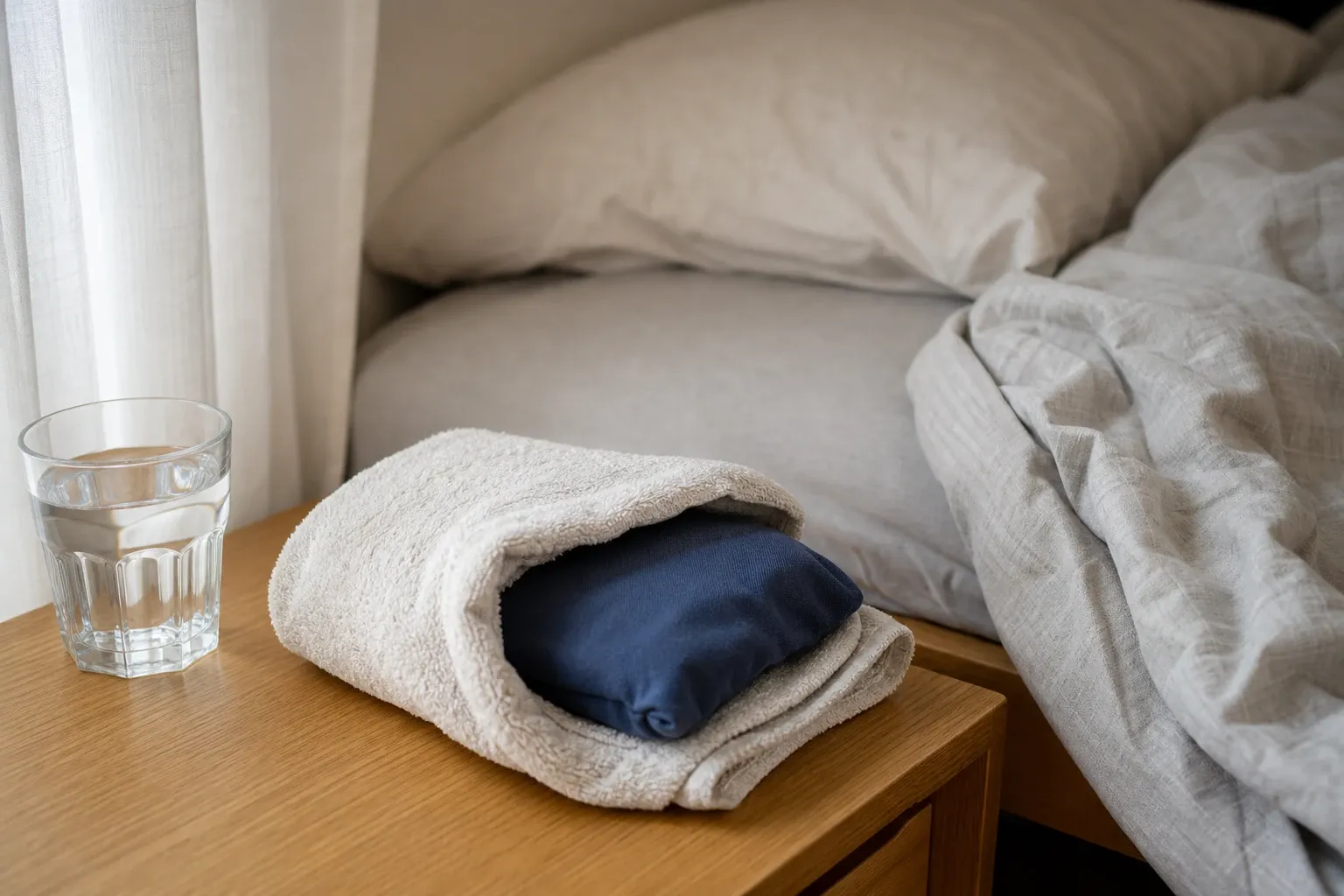
Use heat or a cold pack for 10 to 15 minutes, whichever feels better, with a cloth between it and your skin. Warmth can relax tight muscles, and cold can take the edge off soreness.
Heat is popular. In a study of 187 people seeing a GP for new neck pain, 79% used some form of heat at home. A warm shower works well if you don’t have a heat pack.
Step 2: Slow, gentle neck movements
Small, slow movements within comfort keep the neck from stiffening further. Try these a few times each:
- Chin tucks: gently draw your chin straight back, as if making a double chin.
- Small turns: look a little to the right, then left.
- Small tilts: bring an ear toward a shoulder.
No forcing, bouncing or cracking your neck. Stop if pain spikes or spreads into an arm.
Step 3: Relax your shoulders and posture
Dropping your shoulders away from your ears eases the muscles that pull on a sore neck. Roll them back a few times, then check your screen height so you’re not craning forward.
Example: if you work at a laptop, prop it up or take a break every 30 minutes to reset.
Step 4: Comfort measures and pacing your day
A pharmacist can tell you whether an over-the-counter pain reliever suits you. The guideline review lists NSAIDs and superficial heat as options for acute neck pain, but they aren’t right for everyone.
Spread your tasks out and avoid hard self-massage. Light activity beats lying still all day.
How do I stop it coming back tonight?
Aim for a neutral head position: your nose pointing roughly forward, not tipped up or dropped down. Pillow height and your sleeping position do most of this work. Our guide on how to choose a pillow goes deeper.
Pillow height and fill
The right pillow height (its loft) fills the gap between your head and the mattress without tilting your head. Replace one that’s flat, lumpy or old.
Quick tip: If you wake with your chin pushed to your chest or your head bent back, your pillow is probably too high or too low.
Side sleeper and back sleeper setups
A side sleeper needs a pillow tall enough to fill the space between ear and shoulder. A side sleeper with wide shoulders usually needs more height than one with narrow shoulders.
A back sleeper needs a lower pillow that supports the curve of the neck without pushing the head forward. Our page on the best sleeping position for neck pain compares them.
Contour memory foam pillows are one option. The maker of Derila Ergo says its contoured foam pillow, with front support wings and a cooling cover, suits side and back sleepers. Those are the maker’s claims. A 2025 review of five small pillow studies in chronic neck pain found no pillow type clearly better, so check fit and give any new pillow time.
Positions to avoid
Stomach sleeping with your head turned is the one most likely to leave you stiff. If you’re a stomach sleeper, try a thin pillow or none under your head, or switch to your side. Our stomach sleeping guide has more.
How long should a stiff neck from sleeping take to improve?
Most simple neck strains improve over a few days to a couple of weeks. Slow, steady progress is a good sign.

In the GP study, the usual advice was to wait and see, stay active and improve posture. Most patients reported recovery by the end of a year of follow-up, which tells you little about individual timing.
Return to normal activity bit by bit. If you feel worse each day, that’s your cue to get checked.
Example: by day three you can turn to check your blind spot with a little tightness. That’s progress.
When should I see a doctor about neck pain?
See a GP or doctor if your pain doesn’t improve in a week or two, or if any red flag below shows up. MedlinePlus on neck pain lists similar signs.
Red flags:
- Numbness, tingling or weakness in an arm or hand
- Fever, severe headache, or a stiff neck with light sensitivity: get urgent care
- Pain after a fall, accident or blow
- Severe or worsening pain
- Pain lasting beyond about two weeks
- Waking with neck pain again and again
This page isn’t medical advice. A pharmacist is a good first stop for pain relief questions.
Where can I read more about stiff necks and pillows?
Our parent guide, stiff neck pain after sleeping, covers common causes so you can spot your own pattern. If you want the wider picture of pillows and neck comfort, start with healthy sleep pillows.
If the soreness keeps returning, a new pillow won’t replace a check-up. Book that visit first.
Questions readers ask
Is it better to use heat or ice for a sore neck from sleeping?
Either can help, so pick whichever feels better. Use it for 10 to 15 minutes with a cloth between it and your skin. Many people prefer warmth for tight muscles. Stop if it hurts or your skin looks irritated.
Is it okay to sleep without a pillow with a sore neck?
It depends on your position. Back and side sleepers usually need something to keep the head level, so no pillow can tilt the neck. A thin, soft pillow or rolled towel may be more comfortable for a stomach sleeper.
How should I sleep tonight with a stiff neck?
Lie on your back or side with a pillow that keeps your head level, not tipped up or down. Avoid stomach sleeping with your head turned. If you wake in pain again and again, mention it to a doctor.