We may earn a commission if you buy through links on this page, at no extra cost to you. How this works
Derila Ergo: A contoured memory foam pillow with side wings and a removable, machine-washable cover.
See Derila Ergo on the official site60-day money-back guarantee
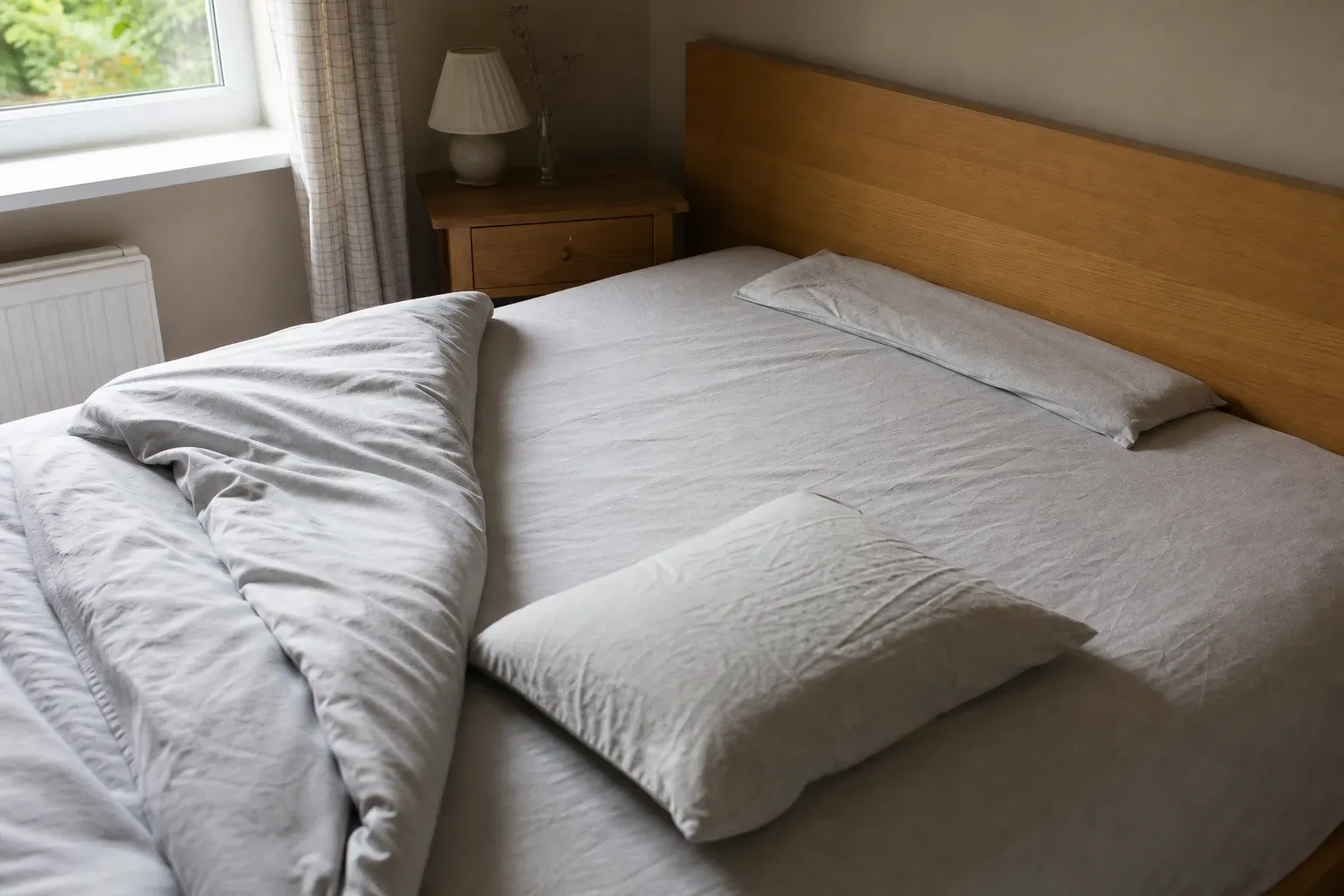
Is sleeping on your stomach bad for you?
Stomach sleeping isn’t harmful for everyone, but it’s the position most likely to leave your neck and lower back feeling tight.
Here’s a plain picture. Turn your head to look over your shoulder, then hold it there for eight hours. That’s roughly what your neck does when you sleep face down.
Who should be more careful:
- People who often wake with a stiff neck or sore lower back.
- Pregnant people. Ask a midwife or doctor what’s right for you.
Who can relax: if you wake up fine and sleep well, there’s no strong reason to force a change. Comfort and harm are different questions. A position can feel cozy and still load your neck, and a position that feels odd at first can turn out to suit you.
This advice is for adults. Never put a pillow in a baby’s sleep area: follow Safe to Sleep guidance and ask your pediatrician.
Why does stomach sleeping make my neck hurt?
Stomach sleeping strains the neck because your head has to rotate to one side and stay there all night.
The turned-head problem
Holding neck rotation for hours loads the same muscles and joints on one side. Think of wringing a towel and leaving it twisted. Morning stiffness is the usual result. MedlinePlus lists awkward sleeping positions among common causes of neck pain.
When a thick pillow makes it worse
A tall pillow props your head up and tips it back while it’s also turned. That adds backward bend on top of the twist. If you sleep face down on a fluffy side-sleeper pillow, this may be your problem.
Other things that add strain
- A soft or sagging mattress lets your hips sink, so your lower back arches. Mattress firmness that holds your middle level helps.
- Always facing the same way. Switching sides during the night can spread the load.
- Arms stretched overhead, which can pull on the shoulders.
One research note: a review of pillow trials found that pillow shape and height affect neck alignment. It mostly studied people with chronic neck pain, not stomach sleepers specifically.
What is the best pillow for stomach sleepers?
The best pillow for stomach sleepers is a thin, soft, low-loft pillow (loft means height) that keeps your head close to level with your body.
Low loft: what height to look for
A simple rule: when you lie face down, your forehead and chin should sit about level, without your chin tilting up. For many people that means a pillow that squashes to an inch or two. Some do best with nothing under the head.
Soft or firm?
Soft and squishy wins here. Thin memory foam, a down alternative fill or even a folded towel all work as tests. A firm pillow pushes your head up.
Pillow under the hips or no pillow at all
If your lower back arches, try a thin pillow under your lower stomach and pelvis. It’s for stomach sleepers whose back feels tight. If you feel pressure on your belly, skip it.
Quick tip: skip tall contour or cervical pillows built for side and back sleepers if they push your head up when you’re face down. For general sizing, see how to choose a pillow.
How to ease neck pain from sleeping on your stomach
Gentle movement in the morning and a loose shoulder routine at night are the simplest ways to ease stomach-sleeping neck stiffness.
- Morning: turn your head slowly left and right, then roll your shoulders. Stop if anything hurts sharply.
- Evening: a warm shower can loosen tight shoulders before bed.
- At night: alternate which way you face, and check your pillow height and mattress. Both are worth a look if stiffness keeps coming back.
Example: someone who always faces right might start the night facing left, so the other side gets a turn.
See a doctor if pain lasts more than a week or two, or if you have numbness, tingling or weakness in an arm or hand, or pain after an injury. MedlinePlus lists these as reasons to get checked. For more on morning stiffness, read stiff neck after sleeping.
How can I stop sleeping on my stomach?
You can move away from stomach sleeping by changing your setup and being patient, because sleep position is a habit that shifts slowly over weeks.
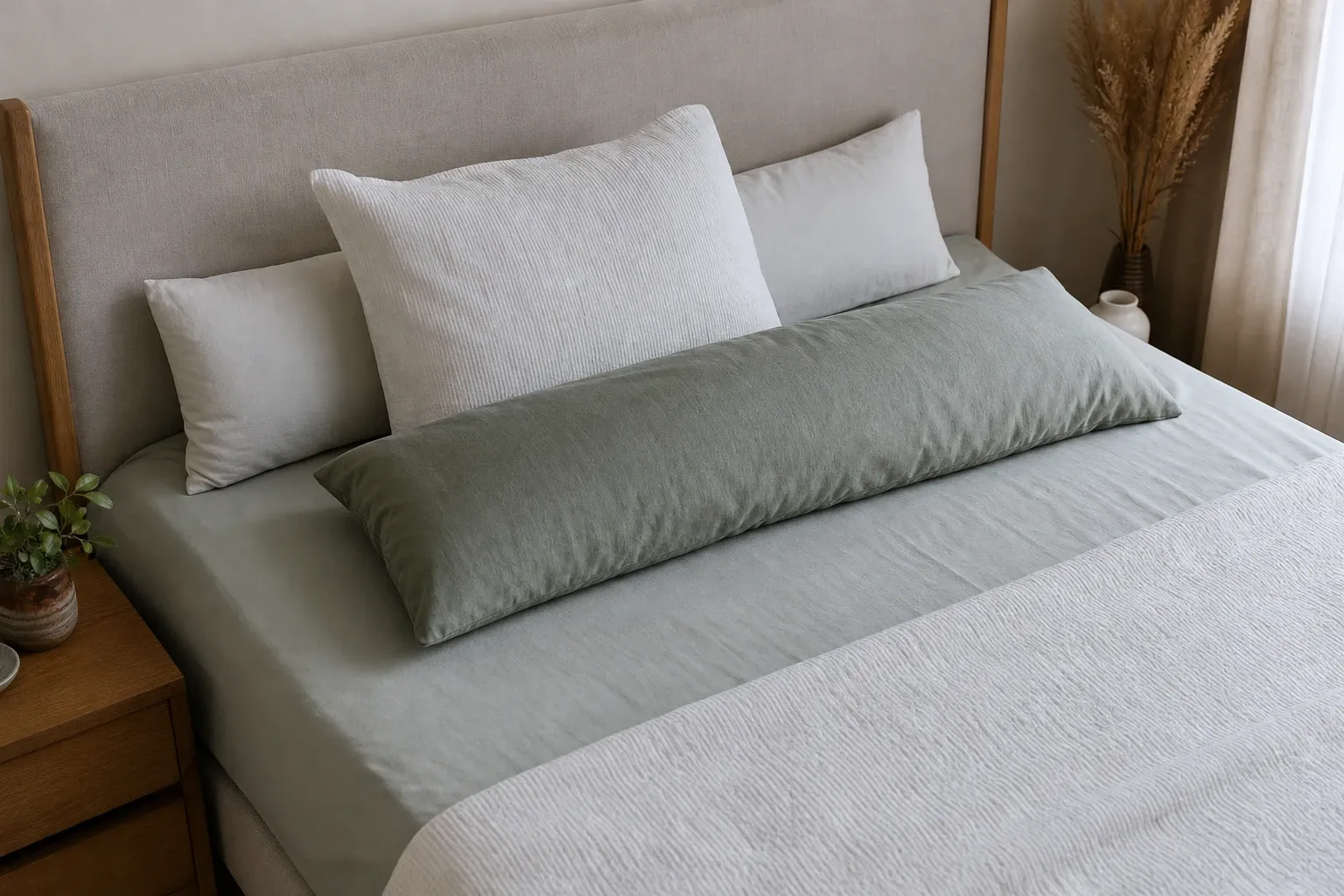
Make side sleeping feel natural
- Hug a body pillow or firm pillow so your arms and chest have something to lean on.
- Put a pillow behind your back so rolling over feels less automatic.
- Pick a side pillow that fills the gap between ear and shoulder. A side sleeper with wide shoulders needs more height than one with narrow shoulders.
- Expect to drift back some nights. That’s normal.
Our guides on pillow height for side sleepers and knee and body pillows go deeper.
Back sleeping as an option
Back sleeping keeps the head facing up, so there’s no twist. It suits people who don’t snore or have breathing concerns. Our back sleeping how-to has steps.
One option for the switch is Derila Ergo, a contoured memory foam pillow with front support wings. The maker says it suits side, back and stomach sleepers, and it hasn’t published a study of the pillow itself. Its standard size is 54 x 36 x 12 cm.
Is a contour pillow ever right for a stomach sleeper?
A contour pillow is usually not right for stomach sleeping, because its raised support is shaped for back and side positions.
It can still help as the pillow you switch to while training yourself toward side or back sleeping. The maker’s directions say stomach sleepers can lie slightly higher with the cheek in the central curve, but a raised pillow is the thing most stomach sleepers are told to avoid.
Check before buying:
- Loft: how tall is it when you lie face down?
- Cover: is it removable and breathable? The maker says Derila Ergo’s cover is machine washable and cooling.
- Fill: memory foam softens with body heat, which some people like and some don’t.
- Flat test: how does it feel on its lowest side?
The maker offers a 60-day guarantee. Returns must be in original condition and packaging, you fill in a form first, and shipping costs aren’t refunded. Check the full terms before ordering.
See Derila Ergo on the official site60-day money-back guarantee
Where this fits with your sleeping position
Stomach sleeping is one piece of the bigger question of which position suits your neck, covered in our guide to the best sleeping position for neck pain.
If you move between positions in the night, pillows for combination sleepers may fit better than one made for a single position. For the wider picture on pillows, try healthy sleep pillows.
If your neck pain lingers or you snore loudly or gasp at night, talk to a doctor. NHLBI describes the signs that need checking.
Questions readers ask
Is it okay to sleep on your stomach every night?
For most healthy adults it isn’t dangerous. The catch is neck strain from a long-held turn. If you wake up fine, you can keep it up. If you wake stiff often, try a thinner pillow or a gradual shift toward your side.
Should stomach sleepers use a pillow at all?
Many do best with a very thin, soft pillow or none under the head, so the neck stays close to level. A thick pillow tips the head back. Try a folded towel as a test, and move to something thinner or thicker based on how your neck feels.
How long does it take to change your sleeping position?
There’s no set time. Sleep position is a habit, and it usually shifts over weeks, not days. Props like a body pillow and a pillow behind your back help. Expect to slip back some nights, and keep going without worrying.