We may earn a commission if you buy through links on this page, at no extra cost to you. How this works
Derila Ergo: A contoured memory foam pillow with side wings and a removable, machine-washable cover.
See Derila Ergo on the official site60-day money-back guarantee

What makes a pillow right for you?
A right pillow fills the gap between your head and the mattress so your neck rests roughly level with the rest of your body. No single pillow fits everyone.
Four things decide the fit: your sleeping position, the pillow’s height (its loft), its firmness, and its fill. Get those four close and most of the work is done.
Here’s a plain example. A side sleeper with wide shoulders has a big gap between ear and mattress. A back sleeper with the same shoulders has a much smaller gap. So the side sleeper needs a taller pillow, even though they may own the same pillow as their partner.
This is a method for comfort, not a medical fix. If you have ongoing pain, skip to the section on neck pain below.
Step 1: Which pillow suits how you sleep?
Your main sleeping position sets the starting loft. Side sleepers go taller, back sleepers medium to low, and stomach sleepers very low.
Side sleepers
A side sleeper needs a higher, firm-enough pillow to fill the space between ear and mattress. This is for you if you wake on your side most nights. It’s not for you if you roll onto your back for half the night.
A chiropractic college blog advises side sleepers to fill the gap between ear and bed and suggests a pillow between the knees for extra support. A knee pillow is optional. For more on this position, see our guide to the best pillow for side sleepers.
Back sleepers
A back sleeper does best with a medium to low loft and medium firmness, with support under the curve of the neck. Too thick pushes your chin toward your chest. Too thin tips your head back.
Example: if your face points at the ceiling and your forehead sits higher than your chin, the pillow is probably too tall. Our page on the best pillow for back sleepers goes deeper.
Stomach sleepers
A stomach sleeper needs a very low, soft pillow, or none at all. Lying face down turns your neck to one side for hours, so a tall pillow makes that twist worse.
If your neck feels twisted in the morning, try starting the night on your side. That’s a suggestion, not a rule, and you don’t have to change if you sleep well.
Combination sleepers
A combination sleeper, who changes position during the night, needs a medium loft or a shape that works both ways. Look for higher edges for side sleeping and a lower middle for back sleeping. An adjustable-fill pillow, where you can add or remove stuffing, is another route.
Step 2: How high and how firm should it be?
The right height keeps your nose and chin level, not tilted up or down. Firmness decides whether the pillow holds that height all night.
Loft and shoulder width
Loft should roughly match the distance from your neck to the outer edge of your shoulder when you’re on your side. Wider shoulders need more loft.
Two small studies back this idea. A pilot study of 15 young adults compared three pillow heights set from each person’s shoulder width and found the lowest neck muscle activity and best comfort at the middle height. Another small study of nine people linked ideal side-sleeping pillow height to shoulder width. Both are tiny, so treat them as hints.
Quick tip: Lie on your side and have someone photograph you from behind. Your head should look level, not tipped toward the mattress or the ceiling.
A soft mattress lets your shoulder sink in, so you may need a lower pillow. A firm mattress usually needs a taller one. Our guides on pillow height for side sleepers and pillow firmness for side sleepers cover this in detail.
The 2-2-1 pillow rule
The 2-2-1 rule is a loose rule of thumb, not a standard. It isn’t backed by any study we know of, and sources describe it differently, so don’t lean on it.
Use the four checks in this guide instead: position, loft, firmness, fill.
Is it healthier to sleep flat or elevated?
Neither is healthier for everyone. A lower pillow suits many back sleepers, while a slightly raised head can feel better with a stuffy nose or reflux.
If you have heartburn, congestion or breathing trouble that keeps coming back, see a doctor rather than stacking pillows.
Step 3: Which fill is best: down, foam, cotton or polyester?
The best fill is the one that holds your loft, stays comfortable in temperature and doesn’t set off allergies. Each fill trades something for something else.
| Fill | Feel | Good for | Watch out for |
|---|---|---|---|
| Down and feather | Soft, moldable | Side and combination sleepers who like to scrunch | Needs fluffing; may bother allergies |
| Memory foam | Slow, steady support | Back and side sleepers who want a fixed shape | Can run warm |
| Contour foam | Shaped curves for the neck | Sleepers who stay in one position | Shape may feel odd at first |
| Cotton | Breathable, firmer | Hot sleepers | Can feel flat or dense |
| Polyester | Soft, light, cheaper | Tight budgets | Flattens sooner |
Down and feather
Down and feather pillows are soft and easy to mold. They usually need regular fluffing, and they aren’t ideal if you have allergies.
Memory foam and contour pillows
Memory foam gives steady support and holds its shape. It can run warm, and a cooling cover can help.
A survey of 332 Korean adults suggested materials like latex or memory foam may reduce neck fatigue. It was a survey, so it shows a link, not proof. For comparisons, see our cervical pillow explainer.
Cotton versus polyester
Cotton is breathable and firmer, while polyester is cheaper, softer and flattens sooner. If you sleep hot, cotton is worth a look. If you’re on a tight budget, polyester works but plan to replace it earlier. Check the cover material too.
Allergies and hypoallergenic fills
For allergies, pick a pillow with a washable cover and treat “hypoallergenic” as a label to check, not a promise. Ask what the fill is and how you wash it. Use a pillow protector and wash on the maker’s schedule.
One example of a contour memory foam pillow is Derila Ergo. The maker says it has front support wings, a cooling cover and hypoallergenic materials, and for side, back and stomach sleepers. The cover is removable and machine washable. The maker hasn’t published a study of Derila Ergo itself.
If you want a trial, the maker advertises a 60-day return from the day you receive the order. Items must come back in original, undamaged packaging after you fill in a return form. Shipping costs aren’t refunded, and return shipping isn’t stated outright, so read the terms first.
See Derila Ergo on the official site60-day money-back guarantee
What if you have neck pain, headaches or a herniated disc?
A suitable pillow may make sleep more comfortable, but it doesn’t treat neck pain or headaches. See a doctor if symptoms are strong or keep coming back.
Pillows for a stiff neck
For a stiff neck, pick a height that keeps your head level, and give it a couple of weeks. A systematic review of five studies with 239 people with long-term neck pain found only limited evidence for specific pillows and no clear winning type.
For everyday self-care and when to get help, see MedlinePlus on neck pain. It says to contact a doctor for pain that doesn’t improve in a week, numbness, tingling or weakness in an arm or hand, or pain after an injury.
Herniated disc: what to ask a professional
If you have a herniated disc, ask your doctor or physiotherapist what position and pillow are right for you. Aim for a comfortable, neutral position, but don’t rely on a pillow to do the work of treatment.
Bring questions: which positions to avoid, how high the pillow should be, and whether a knee pillow helps. Our page on stiff neck after sleeping lists common causes.
How much should a pillow cost, and when should you replace it?
A pillow can cost little or a lot, and price doesn’t guarantee fit. Plan around what you can return and how long the fill will last.
Budget tiers
We don’t have a source for typical prices, so use these as rough, general tiers rather than facts.
- Budget: usually polyester or basic foam. Soft and light, and it flattens sooner.
- Mid-range: often better foam, shredded fill or cotton, with a washable cover.
- Premium: often down, latex or shaped foam, sometimes with adjustable loft.
For a shaped foam pillow like Derila Ergo, check the current price on the maker’s site, since it can change and may differ by country.
Signs a pillow is worn out
A pillow is worn out when it’s lumpy, won’t spring back, is stained, or you start waking with a new stiff neck or allergy flare-ups.
Try the fold test: fold a polyester or feather pillow in half. If it stays folded, replace it. See when to replace pillows and how to clean pillows by fill type.
Use a protector, and wash the cover often. Foam usually needs spot cleaning, so follow the label.
Why do hotel pillows feel so comfortable?
Hotel pillows feel good because they combine a mid-to-high loft, plush but supportive fill, a crisp fresh case and a cool, made-up bed. Many hotels also offer a choice of firmness.
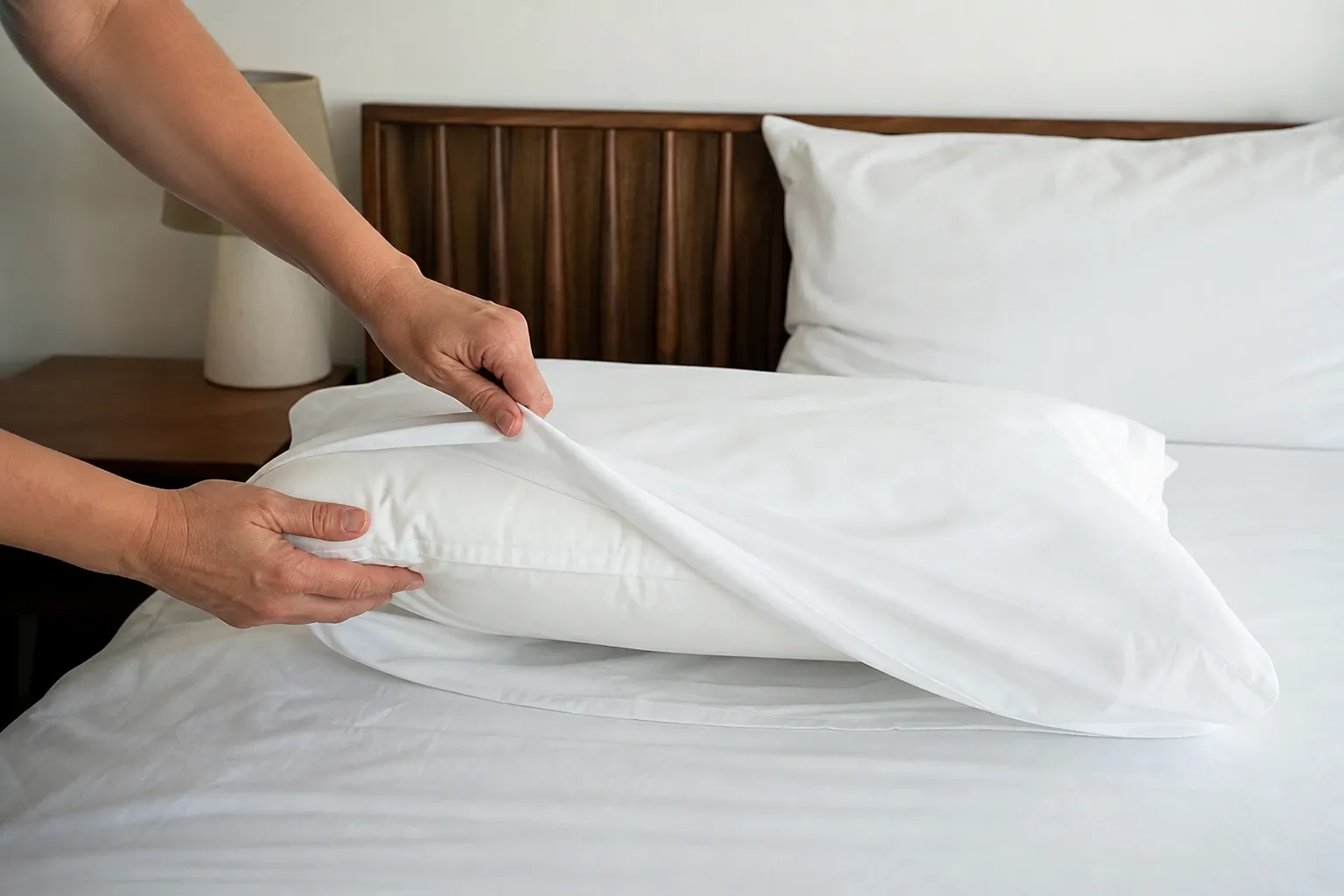
We don’t have a published reason for any one brand, so copy the traits, not the logo. Look for a fresh cover, a loft that suits you, and two firmness options to compare.
Example: buy two different pillows with a return window, try each for a couple of weeks, and keep the one that leaves your neck feeling level in the morning.
Take the 5-question pillow quiz
This quiz turns your position, shoulders, mattress, temperature and allergies into a starting loft, firmness and fill.
Your 5-question pillow quiz
Answer five quick questions for a starting height (loft), firmness and fill. Treat the result as a starting point and use a return window to test it.
Talk to a doctor first
Loud snoring with gasping or pauses in breathing can be a sign of sleep apnea. NHLBI describes the symptoms. A pillow doesn’t treat it, so get checked before you shop.
Very low and soft, or no pillow
Stomach sleeping turns your neck for hours, so pick a very thin, soft pillow, or none under your head. Skip tall contour pillows. A thin pillow under your hips can help if your lower back arches. Sleep hot? Look for latex, a breathable cotton cover or a cooling cover; dense memory foam can run warm. Allergies? Choose a washable cover, add a pillow protector and treat “hypoallergenic” as a label to check. More in our stomach sleeping guide.
Medium to low height, medium firmness
Back sleepers need support under the curve of the neck without the chin pushed toward the chest. Start lower than a side sleeper would, and a little higher if your shoulders are broad. A soft mattress means you can go lower still. Sleep hot? Look for latex, a breathable cotton cover or a cooling cover; dense memory foam can run warm. Allergies? Choose a washable cover, add a pillow protector and treat “hypoallergenic” as a label to check. More in best pillow for back sleepers.
Medium height, or a shape that works both ways
If you change position, look for a medium loft, a contour with higher side edges and a lower middle, or an adjustable fill you can tune. Sleep hot? Look for latex, a breathable cotton cover or a cooling cover; dense memory foam can run warm. Allergies? Choose a washable cover, add a pillow protector and treat “hypoallergenic” as a label to check. More in pillows for combination sleepers.
Tall and firm
Broad shoulders leave a big gap when you lie on your side. Pick a high-loft or adjustable pillow that’s firm enough not to sink, and a little lower if your mattress is soft. Memory foam, latex or shredded foam hold height best. Sleep hot? Look for latex, a breathable cotton cover or a cooling cover; dense memory foam can run warm. Allergies? Choose a washable cover, add a pillow protector and treat “hypoallergenic” as a label to check. Use our pillow height finder for a number in cm.
Medium height, medium-firm
Narrow shoulders leave a smaller gap, so a medium pillow is usually enough, and lower still on a soft mattress. Sleep hot? Look for latex, a breathable cotton cover or a cooling cover; dense memory foam can run warm. Allergies? Choose a washable cover, add a pillow protector and treat “hypoallergenic” as a label to check. Use our pillow height finder for a number in cm.
Medium-high and medium-firm
A side sleeper with average shoulders usually needs a medium-high pillow that fills the ear-to-shoulder gap, a little lower on a soft mattress. Foam or latex holds that height through the night. Sleep hot? Look for latex, a breathable cotton cover or a cooling cover; dense memory foam can run warm. Allergies? Choose a washable cover, add a pillow protector and treat “hypoallergenic” as a label to check. Use our pillow height finder for a number in cm.
One contoured foam option is Derila Ergo (12 cm tall at its standard size). Check the price and the return terms on the official site.
See Derila Ergo on the official site60-day money-back guarantee
Start with your main position
Side sleepers go taller, back sleepers medium to low and stomach sleepers very low. Then match firmness and fill using the steps on this page.
Treat the result as a starting point. Give any new pillow a couple of weeks, and use the return window if it still feels wrong.
See Derila Ergo on the official site60-day money-back guarantee
How does this fit the bigger picture?
Choosing a pillow is one piece of sleeping comfortably, and our guide to healthy sleep pillows covers the rest. Start there for position, care and when to see a doctor.
If you mostly sleep on your side, go next to the best pillow for side sleepers. Back sleepers can head to the best pillow for back sleepers.
Snoring, gasping or daytime sleepiness need a doctor, not a new pillow. The NHLBI list of sleep apnea symptoms explains what to watch for.
More guides in Choosing a pillow
Questions readers ask
Can I use more than one pillow?
Yes, if it keeps your neck level. Side sleepers sometimes add a thin pillow to reach the right height, and many people put one between the knees. Avoid stacking so high that your chin tips toward your chest. For babies, don’t use pillows at all.
How often should I wash a pillow?
Check the care label first, since fills differ. A removable cover can usually go in the wash regularly, and a pillow protector helps. Foam is often spot cleaned rather than soaked. If it smells, stays stained or flares allergies, wash or replace it.
How long does it take to get used to a new pillow?
It varies, and there’s no set timeline. A common approach is to give a new pillow about two weeks unless it clearly hurts. If your neck feels worse or you get numbness or tingling, stop using it and see a doctor.