We may earn a commission if you buy through links on this page, at no extra cost to you. How this works
Derila Ergo: A contoured memory foam pillow with side wings and a removable, machine-washable cover.
See Derila Ergo on the official site60-day money-back guarantee
Can you wash your pillow? Check the fill first
Your pillow’s care label tells you whether it can be washed, so read it before anything else. Look for words like “machine washable,” “dry clean only” or “spot clean only.”
No label? Work out the fill by feel. Foam is dense and springy. Polyester fiber is light and lumpy. Feather and down rustle, and feathers may have small quills.
Covers and pillow protectors (zip-on fabric layers) are separate. Wash them on their own, following their own labels.
Example: a pillow with a worn, unreadable label that squishes back slowly is almost certainly foam. Treat it as spot-clean only.
Pillow cleaning chart: what is machine-washable by fill type
This chart shows at a glance which fills can go in the washer. Your own care label wins if it says something different.
| Fill | Machine wash? | Water | Drying | How often |
|---|---|---|---|---|
| Memory foam (solid) | Never | Cool, spot only | Air dry flat, away from sun | Spot-clean as needed; cover every 1-2 weeks |
| Shredded foam | Usually no; check label | Cool, spot only | Air dry, fluff often | Spot-clean as needed |
| Polyester fiber | Yes, gentle cycle | Warm | Low heat, dryer balls | Every 3-6 months |
| Down and feather | Yes, gentle cycle | Warm | Low heat, dryer balls, fully dry | Every 3-6 months |
| Latex | Never | Cool, spot only | Air dry flat | Spot-clean as needed |
| Buckwheat | No (empty hulls, wash cover) | Cover only | Air the hulls | Cover every 1-2 weeks |
What to expect: foam is cleaned by spot treatment and airing, so it won’t look brand new. Fiber and feather pillows come out fresh when they dry all the way.
How do you wash fiber, down and feather pillows in a machine?
Polyester fiber, down and feather pillows can be machine-washed on a gentle cycle with mild detergent, then dried fully on low heat.
Step 1: Prepare and check for damage
Check the seams and mend small tears before washing, or the filling will escape. Take off any cover or protector and wash it separately.
Step 2: Wash two pillows to balance the load
Wash two pillows together so the drum stays balanced. Use a small amount of mild detergent and a gentle cycle with warm water. Too much soap is the usual cause of stiff pillows.
Step 3: Rinse again to remove detergent
Run an extra rinse. Leftover soap makes pillows stiff and clumpy. Press out extra water gently, without twisting.
Step 4: Dry completely
Dry on low heat with clean tennis balls or dryer balls, and stop to fluff every so often. Damp filling can turn musty, so keep going until there’s no cool, clammy spot in the middle. This can take several cycles, especially for down.
Quick tip: Press a handful of filling to your cheek. If it feels cool or damp, it needs more time.
How do you clean a memory foam or contour pillow?
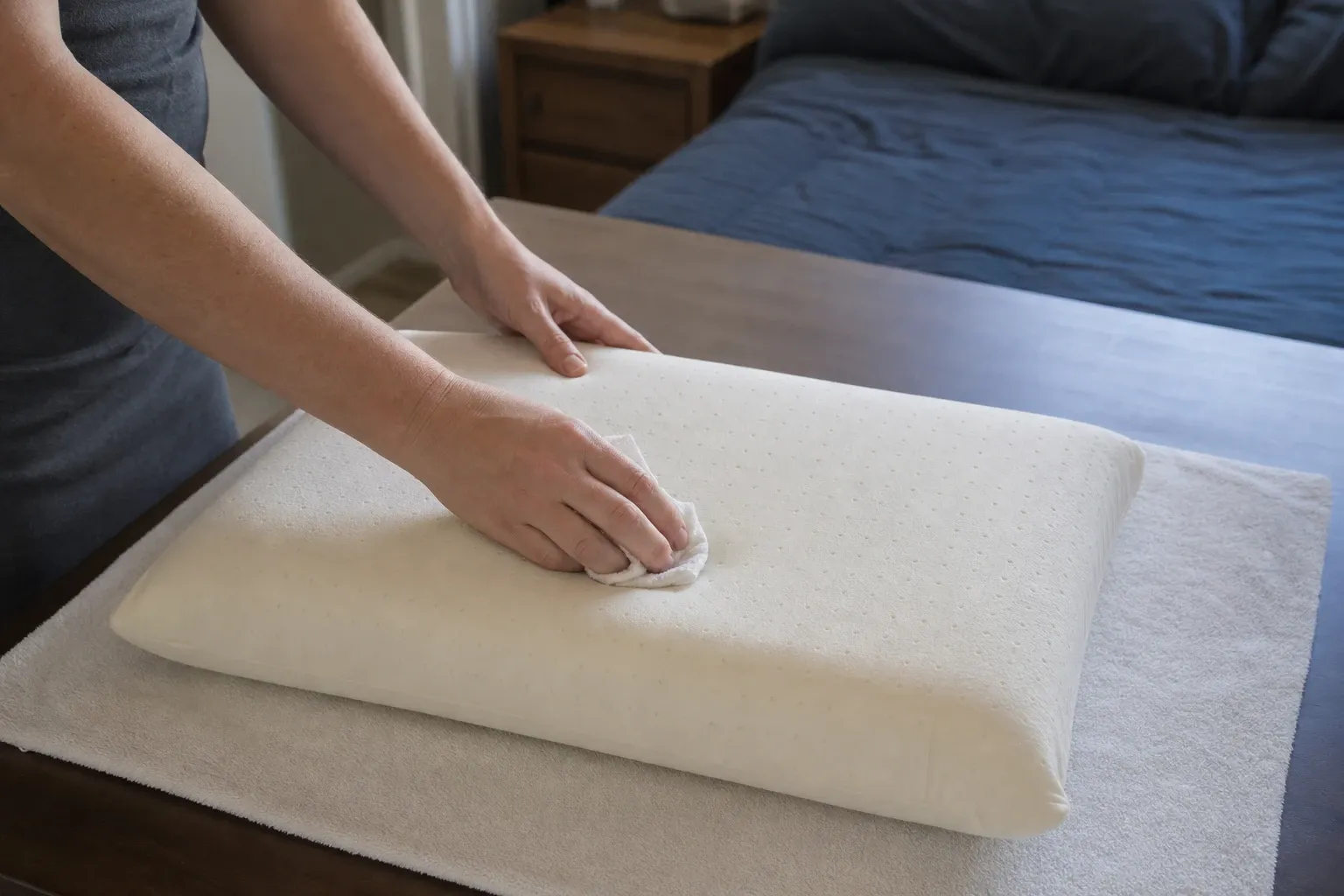
Memory foam is spot-cleaned and air dried, never soaked, wrung out or machine-washed, because it can break down and stays wet inside.
Spot-clean the foam
Vacuum the pillow first. Then dab the stain with a cloth, a little mild soap and a small amount of water, and blot dry with a clean towel. On contour pillows with wings, work gently in the curves.
Wash the cover
If the cover is removable, wash it as its label says. Derila Ergo is one example: the maker says its zippered cooling cover is machine washable (warm), and the foam core isn’t. The maker also calls the materials hypoallergenic, which is its claim; for what to check on that label, see our hypoallergenic memory foam pillow guide.
Air dry the right way
Lay the foam flat, away from direct sun and heat. Let it dry fully before the cover goes back on, or damp foam can smell.
How often should you clean a pillow and when should you replace it?
Wash the cover or protector every one to two weeks and the pillow itself about every three to six months. That’s a practical routine, not a rule from a study.
Bedding does pick up germs. In a small home study of nine people, bacteria and fungi on bed linen rose within a week and stayed level for four weeks. That’s a reason to keep covers on a regular wash, not a reason to worry.
A pillow protector cuts how often you need to deep clean the pillow. Airing pillows in fresh air between washes helps too.
Replace a pillow if it stays lumpy, flat, smelly or stained after cleaning, or if it no longer supports your neck comfortably. Our guide on when to replace pillows has more signs.
If you wake with ongoing neck pain, numbness or tingling in an arm, a clean pillow won’t solve it. MedlinePlus lists when to contact a doctor, including pain that doesn’t improve in a week.
Where does pillow cleaning fit in a healthy sleep setup?
A clean pillow is one small part of comfortable sleep. Our healthy sleep pillows guide covers how to pick a pillow for your sleeping position and neck.
If you sleep hot, a cooling pillow may be worth a look, and its cover will need regular washing too.
If you’re shopping for a foam pillow with a washable cover, you can check the current Derila Ergo price and the 60-day return terms on the official site. The maker says the return needs original packaging and that shipping costs aren’t refunded.
See Derila Ergo on the official site60-day money-back guarantee
Questions readers ask
Can I put a pillow in the dryer?
Fiber, down and feather pillows can go in the dryer on low heat with dryer balls, if the care label allows it. Dry them fully. Memory foam and latex should not go in the dryer; heat can damage them, so air dry flat.
How do I get yellow sweat stains out of a pillow?
For washable fills, wash with mild detergent on a gentle cycle, then rinse again. For foam, dab the stain with a cloth, mild soap and a little water, then blot and air dry. Old stains may fade only partly; a protector helps prevent new ones.
How do I know a pillow is fully dry?
Squeeze the middle and hold it against your cheek. If it feels cool, damp or heavy, it’s not done. Fiber and feather pillows may need several dryer cycles on low heat. Foam needs a long, flat air dry before reuse.