We may earn a commission if you buy through links on this page, at no extra cost to you. How this works
Derila Ergo: A contoured memory foam pillow with side wings and a removable, machine-washable cover.
See Derila Ergo on the official site60-day money-back guarantee

Can a pillow treat sleep apnea or snoring?
No, a pillow does not treat sleep apnea and it does not cure snoring. “Apnea pillow” and “anti snoring pillow” are marketing labels, not medical categories.
Snoring is noise from soft tissue vibrating in your throat. Sleep apnea means breathing repeatedly pauses during sleep. They can overlap, but they aren’t the same thing, and only a doctor can tell which one you have.
What a pillow can do is change how you lie and how comfortable that position is. That’s a real, modest job.
For example, someone who snores mostly on their back might find a pillow that makes side sleeping comfortable helps them stay on their side. The pillow isn’t treating anything. It’s just making a better position easier to hold.
When should I see a doctor about snoring?
See a doctor if your snoring comes with gasping, paused breathing or heavy daytime sleepiness. Don’t buy a pillow instead of getting checked.
Signs that could point to sleep apnea
Loud snoring plus any of these signs is worth a doctor visit: gasping or choking at night, pauses a partner has noticed, morning headaches or a dry mouth. Daytime sleepiness counts too, like nodding off at work, struggling to concentrate or feeling drowsy while driving. The NHLBI lists snoring, gasping and daytime sleepiness as symptoms to raise with a doctor.
The signs can look different in some people. A consensus paper on women notes that symptoms in women are often less typical, such as insomnia, daytime tiredness or morning headache. Higher blood pressure or extra weight can raise the odds, so mention them to your GP.
What a doctor or sleep study does
A sleep study records your breathing and sleep, and it’s how apnea is confirmed. A lab sleep test is called polysomnography, and it can show the degree and type of apnea. Some people can do a simpler version at home.
If apnea is found, your doctor decides the treatment. That’s often CPAP, a mask that gently keeps your breathing passage open with air pressure. Please don’t skip this step or swap treatment for a pillow.
Does sleeping on my side help snoring?
Side sleeping helps some people who snore, but not everyone, and results vary. If apnea is suspected, ask your doctor before changing anything.
Why back sleeping can make snoring worse
Back sleeping can make snoring louder for some people because gravity lets the tongue and soft tissue drift backward. Moving to your side can ease that for some. Keeping people on their side is called positional therapy.
Research on this is mostly about apnea. A Cochrane review of eight small trials found positional therapy did better than doing nothing, but CPAP reduced breathing pauses more. The authors rated the evidence low to moderate and the studies were short.
What a pillow can and cannot change
A pillow can make side sleeping comfortable enough that you stay in it. It can’t stop your tissue vibrating or fix breathing pauses.
Example: a side sleeper with wide shoulders who uses a flat pillow ends up with a bent neck, wakes sore and rolls onto their back. A taller, firmer pillow fills that gap, so the side position becomes easier to keep. Our guide to pillow height for side sleepers goes deeper.
What is the best pillow for snoring?
The best pillow for snoring is one that keeps you comfortable in a position your doctor is happy with. No pillow is proven to stop snoring.
Contoured pillows for side and back sleepers
A contoured pillow has a curve for the neck and a lower spot for the head. Side sleepers get room for the shoulder. Pick the height to fill the gap between shoulder and head so your neck stays level. See our contour pillow comparison for options.
Wedge pillows a doctor suggests
A wedge pillow raises your upper body on a slope. Use one only if a doctor suggests it, since the right setup depends on the cause. Our wedge pillow page covers the basics.
What to skip
Skip any pillow that makes medical promises about snoring or apnea. Also skip ads that lean on fear. If the claim sounds medical, it needs medical proof, and a pillow page can’t give it.
How do I choose a pillow if I snore and sleep on my side?
Choose a side-sleeping pillow by loft, which is its height, matched to your shoulder width. Wider shoulders usually need a taller pillow.
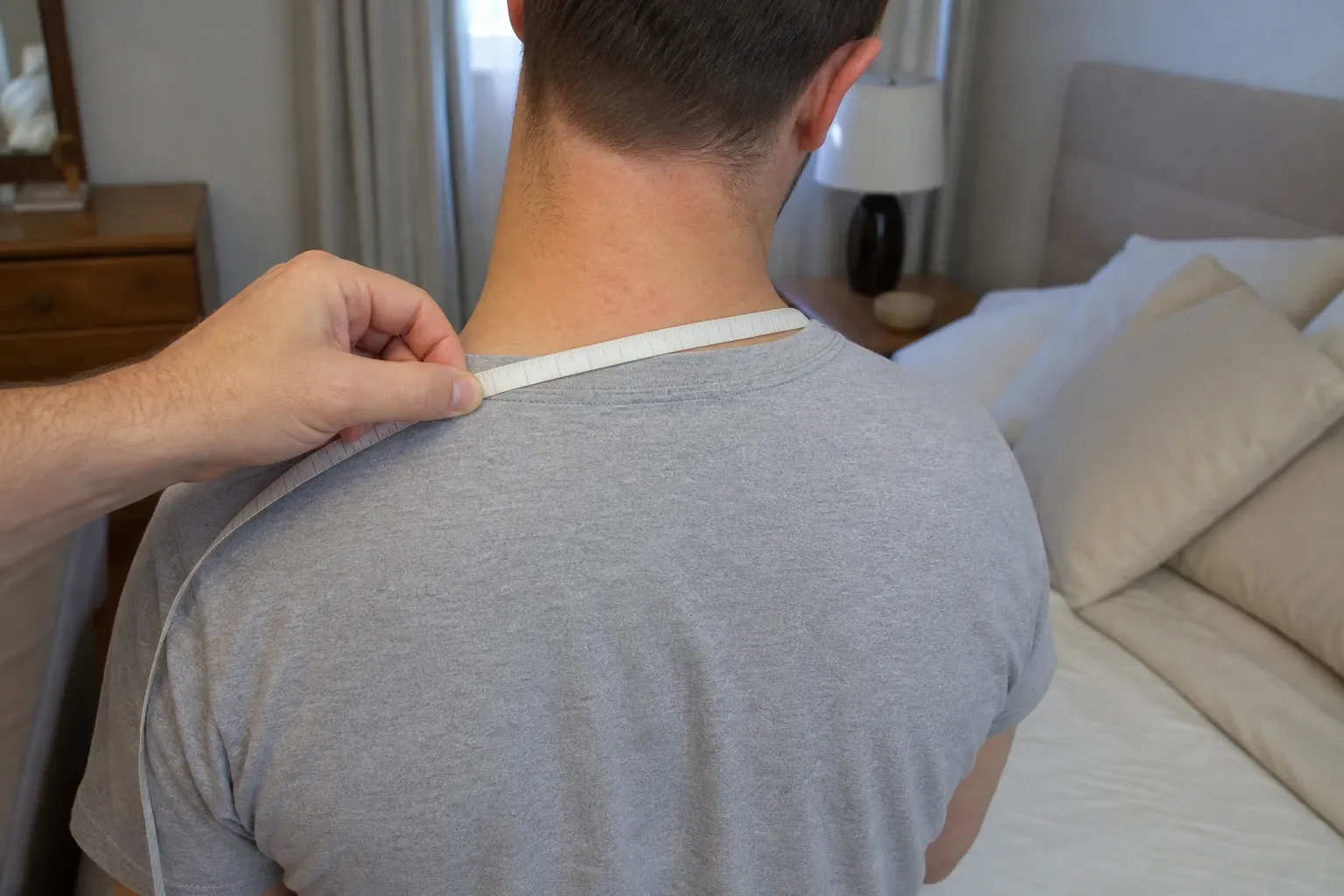
Here’s a simple checklist:
- Measure from the outside of your shoulder to the side of your neck. That’s roughly the loft you need.
- Look for firm, even support that doesn’t sink flat.
- Pick a breathable cover and parts you can wash.
- Check the return policy before buying.
Give a new pillow a couple of weeks to feel normal. Keep short notes on how you sleep and how tired you feel. If snoring or tiredness continues, tell your doctor.
Quick tip: Ask your partner to note whether the snoring changes when you stay on your side. It’s useful information for your doctor too.
Where does a contoured memory foam pillow fit in?
A contoured memory foam pillow fits as a comfort choice for side and back sleepers whose doctor has cleared them. Derila Ergo is one example, sold by UAB Domestica.
The maker describes it as memory foam with front support wings and a removable, machine-washable cooling cover. The standard size is 54 x 36 x 12 cm. The maker also says the materials are hypoallergenic and that it suits side, back and stomach sleepers.
The maker also makes snoring and posture claims. Those are the maker’s claims, and they shouldn’t be read as a treatment for snoring or apnea. The maker hasn’t published a study of Derila Ergo itself.
The maker advertises a 60-day guarantee. Returns must be in original, undamaged packaging after an RMA form, and shipping costs aren’t refundable. Our Derila Ergo review has the details.
Check the current price and return terms before you decide.
See Derila Ergo on the official site60-day money-back guarantee
Where can I read more about pillows and neck comfort?
Our practical guide to healthy sleep pillows covers choosing a pillow by sleeping position and neck comfort. It’s the best starting point if you’re not sure where to begin.
If you sleep mostly on your side, the side sleeper pillow guide is a natural next read. For neck soreness, see pillows for neck pain. If pain lasts more than a week or brings numbness or arm weakness, MedlinePlus on neck pain explains when to contact a doctor.
Questions readers ask
Is there a pillow for sleep apnea that works?
No pillow treats sleep apnea. Some positional pillows aim to keep people on their side, and small studies suggest that helps certain people with apnea, but CPAP reduced breathing pauses more. Get a diagnosis first and let your doctor choose the treatment.
Can a wedge pillow stop snoring?
There’s no good proof a wedge pillow stops snoring. Raising the upper body may feel better for some people, but the right setup depends on the cause. Use a wedge for snoring only if a doctor suggests it, especially if apnea is possible.
Should I use a pillow with a CPAP machine?
Yes, you still need a comfortable pillow, but ask your sleep clinic or doctor about fit. Mask and hose can shift on a very thick or lumpy pillow. A pillow never replaces CPAP, so keep using the machine as prescribed.