We may earn a commission if you buy through links on this page, at no extra cost to you. How this works

Quick picks
Derila Ergo is our top pick for combination sleepers who spend most nights on their back and side. It is a contoured memory foam pillow, not an adjustable shredded-foam pillow, so it suits people who want a set shape rather than a pillow they tinker with.
Our top pick: Derila Ergo
- A contoured shape with front support wings. The maker says the contour is shaped to support the neck for back and side sleepers.
- A medium height of 12 cm (about 4.7 inches), right in the range most combination sleepers need.
- A removable, machine-washable cooling cover, and a price that drops to $37.49 per pillow in the 4-pillow family pack.
Check the current Derila Ergo price on the official site. The maker offers a 60-day return from the day you receive the order. Non-defective items must come back in manufacturer’s condition, in the original undamaged packaging, with an RMA number, and shipping costs are not refunded.
See Derila Ergo on the official site60-day money-back guarantee
Other good options, each for a narrower need:
- Coop Sleep Goods Adjustable Pillow: best adjustable fill. It uses a blend of foam and microfibers you can add or remove.
- Nectar Tri-Comfort Cooling Pillow: best for changing firmness without removing fill, using zippers on each side.
- Brooklyn Bedding Latex Pillow: best latex option, sold in a high and a low loft.
- Luxome LAYR: best for stomach and back sleepers, according to Mattress Clarity.
Derila Ergo
A contoured memory foam pillow from UAB Domestica, 54 x 36 x 12 cm, with front support wings and a zippered cooling cover. The maker says it offers support for side, back and stomach sleepers, though the fixed shape works best for back and side.
Pros
- Contoured shape with wings for side sleeping
- Medium 4.7-inch height
- Cover is removable and machine wash warm
- Bundle pricing lowers the cost per pillow
Cons
- Loft can’t be adjusted
- Firmness rating not stated
- Buy only from the official site so the 60-day return policy applies
See the bundle prices and the 60-day return policy on the official site.
See Derila Ergo on the official site60-day money-back guarantee
Coop Sleep Goods Adjustable Pillow
Mattress Clarity describes it as a medium-firm blend of foam and microfibers you can shape to fit. Good if you want to set your own height.
- Pros: adjustable fill; suits many positions
- Cons: price, size and return terms not stated here
Nectar Tri-Comfort Cooling Pillow
Sleepopolis reports two side zippers change the feel from soft to firmer, plus a moisture-wicking cover.
- Pros: three firmness settings; cooling cover
- Cons: price and return terms not stated here
Brooklyn Bedding Latex Pillow
A solid latex core with a firm, bouncy feel and a cooling cover, in high and low loft.
- Pros: springy latex; two lofts
- Cons: dense feel isn’t for everyone; price not stated here
Luxome LAYR
Named best for stomach and back sleepers in one roundup.
- Pros: a pick aimed at low-loft positions
- Cons: materials, loft, price and return terms not stated here
Which pillow suits a combination sleeper?
The best pillow for combination sleepers is one that fits the position you spend most of the night in and still feels fine in the others. For most people that means a medium pillow of about 4 to 5 inches.
If you change positions a lot, adjustable shredded foam or latex is the safest all-round choice, because you can add or take out fill. If you mostly sleep on your back and side, a contour pillow gives a set shape for both. If you start on your stomach and end up on your side, go lower and softer.
No single pillow suits everyone. Fit depends on your sleeping position, your shoulder width and your mattress firmness. A side sleeper with wide shoulders on a firm mattress needs more height than a slim back sleeper on a soft one.
Here is how we judged each pick:
- Loft (the pillow’s height) in inches
- Firmness on a 1 to 10 scale, where 1 is very soft
- Cooling features
- Materials
- Price per pillow
- Return terms
Quick tip: For a week, notice which position you wake up in. That’s usually your main position, and the one to buy for.
Pillow types matched to side, back, stomach and combination sleepers
Side sleepers need the highest pillow, back sleepers a medium one, and stomach sleepers the lowest. Combination sleepers do best in the middle, with fill they can change.
| Position | Loft (inches) | Firmness (1-10) | Best material | Who should skip it |
|---|---|---|---|---|
| Side | about 4 to 6 | 6 to 7, medium-firm | Contour memory foam, latex, adjustable shredded foam | Anyone who also sleeps on their stomach a lot |
| Back | about 3 to 4 | 5 to 6, medium | Contour memory foam, latex, medium down | Side sleepers with wide shoulders |
| Stomach | under 3, or none | 3 to 4, soft | Down, soft shredded foam, low-loft latex | Side and back sleepers |
| Combination | 4 to 5 | 5 to 6, medium | Adjustable shredded foam or latex | People who want a fixed shape |
These ranges are practical starting points, not rules. Here’s how our product picks line up on the same kind of facts.
| Product | Type and size | Loft and firmness | Cover | Price per pillow | Return terms |
|---|---|---|---|---|---|
| Derila Ergo | Contoured memory foam, 54 x 36 x 12 cm | 12 cm (4.7 in); firmness not stated | Removable, zippered, machine-washable cooling cover | $59.99 (1); $49.99 (2 for $99.98); $37.49 (4 for $149.96) | 60 days from receiving the order; manufacturer’s condition, original packaging; shipping costs not refunded |
| Coop Sleep Goods Adjustable | Foam and microfiber blend, adjustable | Adjustable loft; medium-firm | Not stated | Not stated | Not stated |
| Nectar Tri-Comfort Cooling | Adjustable via side zippers | Soft to firmer settings | Moisture-wicking cover | Not stated | Not stated |
| Brooklyn Bedding Latex | Solid latex core | High or low loft; firm | Cooling cover | Not stated | Not stated |
| Luxome LAYR | Not stated | Not stated | Not stated | Not stated | Not stated |
Side sleepers
Side sleepers need a pillow of about 4 to 6 inches that fills the gap from your ear to your shoulder. A small 2024 study of 15 young adults found muscle activity was lowest and comfort highest when pillow height matched shoulder width. Wider shoulders usually need the taller end.
Back sleepers
Back sleepers do best on a medium pillow of about 3 to 4 inches that supports the curve of the neck without pushing the head forward. A rolled edge or contour can help here. More on this in our guide to the best pillow for back sleepers.
Stomach sleepers
Stomach sleepers need the thinnest, softest pillow, under 3 inches, or none under the head. Sleepopolis notes that lower lofts keep the neck from straining upward for this position.
Combination sleepers
Combination sleepers usually land on 4 to 5 inches and a medium feel of 5 to 6. Adjustable fill lets you remove a handful if it’s too tall when you roll onto your front.
Side and stomach sleepers: can one pillow work for both?
One pillow can work for side and stomach sleepers, but it has to be a compromise: medium-soft and about 3 to 4 inches high. Side sleeping needs height, stomach sleeping needs almost none, so adjustable fill matters most for this mix.
Firmness and loft compromise
The side and stomach compromise is a medium-soft pillow, about 4 of 10, that squashes down when you lie face-down. Shredded foam and down do this well. Solid memory foam is often too dense for stomach sleeping.
Some people find lying face-down with the head turned hard on the neck, so keep the pillow thin for that part of the night.
When to use a second thinner pillow
A second, thinner pillow helps if you have one clear side position and one clear stomach position. Keep your main pillow for your side and slide a flat one under your head, or under your hips, when you turn over.
For example, a side sleeper who drifts onto their front near morning might keep a slim pillow at the edge of the bed. A body pillow hugged in side sleeping can also keep your top arm and knee from pulling your hips and shoulders forward.
Adjustable, memory foam, latex, down or contour: which material?
An adjustable pillow is the best fit for switching positions, while memory foam, latex and down each suit a narrower group. A 2020 survey of 332 Korean adults linked latex or memory foam neck support with less neck fatigue, though a survey can’t show cause.
Adjustable shredded foam
Adjustable shredded foam lets you add or remove fill to change the loft. Mattress Nerd notes shredded foam is usually adjustable, while a solid block suits people who don’t toss and turn. Best for true combination sleepers.
Memory foam and contour pillows
A contour pillow is a shaped foam pillow with a dip for the head and raised edges for the neck. The maker of Derila Ergo says its contour supports the neck for back and side sleepers and that its wings are for side sleeping. The fixed shape can feel high for stomach sleepers.
Latex
Latex is springy, holds its shape and tends to sleep cooler than memory foam. A 2021 review of pillow trials found rubber (latex) pillows linked with less neck pain in people with long-term neck pain, and said shape and height affect neck position most.
Down and gel
Down is soft and squashes easily, which suits stomach sleepers, but it needs fluffing and may bother people with allergies. Gel layers are added to foam to feel cooler to the touch.
Cooling and allergies
Memory foam holds heat unless it has a cooling cover, gel or airy foam. If you have allergies, a zippered, washable cover helps control dust mites, tiny bugs that live in bedding.
Mattress firmness matters too. A soft mattress lets your shoulder sink deeper, so you need a lower pillow; a firm one needs a taller pillow.
What pillow do chiropractors recommend for side sleepers?
For side sleepers, clinicians generally suggest a pillow that keeps your head level with your spine, which means filling the gap between ear and shoulder. That’s usually a medium-firm pillow of 4 to 6 inches. A small 2015 study of 21 adults found a 10 cm (about 4 inch) foam pillow most comfortable for side lying.
A pillow is not a substitute for medical assessment, although some pillow types have shown benefit for long-term neck pain. If you’re pregnant or recovering from surgery, follow your clinician’s advice on positioning first.
See a doctor before shopping if you have:
- Neck pain that doesn’t improve in a week or two, or spreads into an arm
- Numbness, tingling or weakness in an arm or hand
- Headaches with neck pain, or pain after an injury
- Loud snoring with gasping, pauses in breathing or heavy daytime sleepiness
If a doctor says your snoring is worse on your back, side sleeping can help some people, and a pillow that fits you can make side sleeping comfortable.
Where does a contoured memory foam pillow fit, and what does it cost?
Derila Ergo, sold online by UAB Domestica, fits back and side sleepers who want a ready-shaped pillow at a medium height. It’s contoured memory foam with front support wings, a cooling cover, and a hypoallergenic claim from the maker.
The maker says the foam contours to your shape and that the cover and breathable foam help keep it cool and dry. The maker hasn’t published a study of Derila Ergo itself. It arrives vacuum-packed, so leave it 6 to 8 hours to expand.
Price per pillow and budget tiers
Derila Ergo costs $59.99 for one pillow, with lower prices per pillow in bundles:
- 1 pillow: $59.99
- 2 pillows: $99.98, or $49.99 each
- Family pack, 3+1 free: $149.96, or $37.49 each
Prices were checked on the official site on November 4, 2026, and they change often. Prices for the adjustable picks above aren’t stated here, so check each seller.
Return terms
Derila Ergo has a 60-day return policy from when you receive the order. Non-defective items must come back in manufacturer’s condition, in the original undamaged packaging. You fill in the contact form, wait up to 3 business days for an RMA number and address, then ship it with tracking. Shipping costs are not refunded, and the refund is issued within 14 days of the parcel being received and inspected.
Who should skip it
- Mostly stomach sleepers, who need a lower, softer pillow
- Anyone who wants to adjust the fill
- Anyone hoping Derila Ergo will treat snoring, sleep apnea or neck pain; the maker hasn’t published evidence that it does
Compare the bundle prices and return terms on the official site.
See Derila Ergo on the official site60-day money-back guarantee
How long does a pillow last and how do you care for it?
Replace your pillow if it stays folded in half, goes lumpy, or you keep waking with the same stiffness.
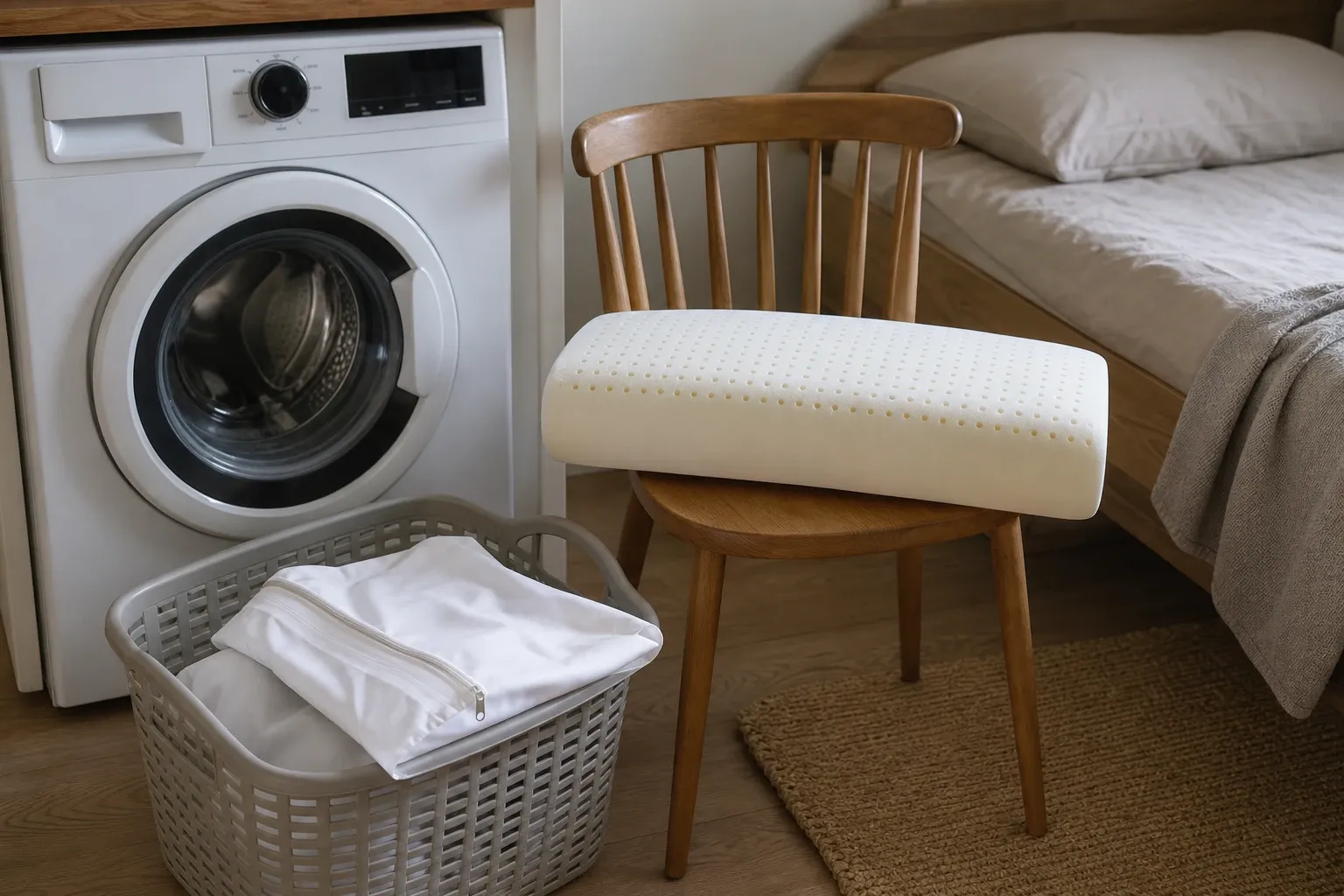
Wash by the label. Most foam can’t go in the washing machine, so wash the cover and spot clean the core. Derila Ergo’s cover is zippered and machine wash warm. Down and some fiber pillows can be washed whole, then dried fully.
Never put any pillow in a baby’s sleep space. Safe sleep guidance says babies sleep on a firm, flat surface with nothing else in the crib.
A quick checklist before you buy
This checklist helps you pick a pillow for all sleep positions in a few minutes.
- Name your main position, the one you wake up in.
- Measure ear to shoulder if you side sleep; wider shoulders need more loft.
- Factor in your mattress: soft means lower, firm means higher.
- Choose adjustable if you switch a lot; contour if it’s mostly back and side.
- Check cooling and a washable cover if you run hot or have allergies.
- Read the return terms, including who pays shipping.
For a fuller method, see how to choose a pillow step by step.
Where this fits in our pillow guide
Picking a pillow for mixed positions is one part of sleeping comfortably, and our practical guide to pillows and neck comfort covers the rest, from neck stiffness to pillow care. If one position clearly wins for you, our picks of the best side pillow for side sleepers go deeper on height and shoulder width. If you want to tune loft night by night, compare our adjustable loft pillows side by side.
Our pick for most readers
Derila Ergo is the best pick for most readers who sleep on their back and side, thanks to its contoured shape, medium 4.7-inch height, washable cooling cover and $37.49 per pillow in the family pack. The 60-day return policy gives you time to judge the fit, as long as you keep the packaging and allow for unrefunded shipping.
If you roll onto your stomach a lot, an adjustable pillow like the Coop Sleep Goods or a low-loft latex pillow may suit you better.
Check today’s Derila Ergo bundle prices on the official site.
See Derila Ergo on the official site60-day money-back guarantee
Questions readers ask
Can I use two pillows if I switch positions?
Yes. Many combination sleepers keep a medium pillow for side or back sleeping and a thin one for stomach sleeping. Stacking two pillows under your head usually makes it too high, though, so use the second pillow on its own or under your hips instead.
Is a flat pillow better for stomach sleepers?
Usually, yes. Stomach sleepers do best with a soft pillow under about 3 inches, or no pillow under the head at all. A tall pillow tips the head back and up. Some stomach sleepers also like a thin pillow under the hips.
How do I know if my pillow is too high?
A pillow is likely too high if your chin tips toward your chest on your back, or your head tilts up toward the ceiling on your side. Ask someone to check if your nose lines up with the middle of your chest while you lie down.