We may earn a commission if you buy through links on this page, at no extra cost to you. How this works
Quick picks
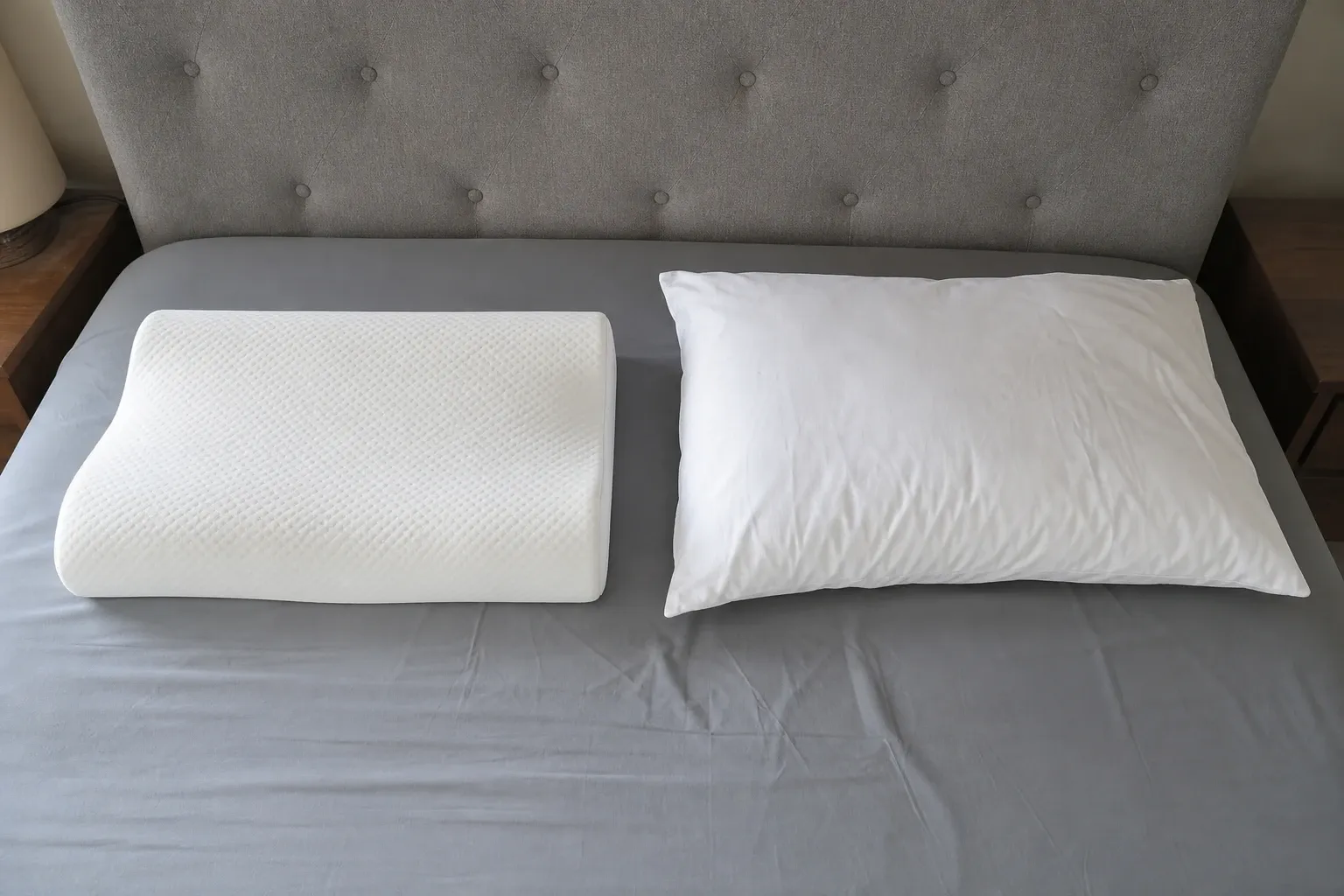
The best orthopedic pillow for most back and side sleepers is a contoured foam pillow with a moderate height, and our top pick for that job is Derila Ergo.
Our top pick: Derila Ergo. It’s a contoured memory foam pillow, not an adjustable shredded-foam or latex pillow, so it’s the easy all-round choice if you sleep on your back and side.
- Contoured shape for back and side sleepers. The maker says the contour and front support wings are shaped to support the neck, with a cooling cover.
- Fair price per pillow. It’s $59.99 for one, $49.99 each in a pair ($99.98), or $37.49 each in the 3+1 family pack ($149.96).
- A 60-day return window. You can return it within 60 days of receiving it, on the conditions listed further down this page.
See the current Derila Ergo bundles and the return terms on the official site.
See Derila Ergo on the official site60-day money-back guarantee
- Saatva Latex Pillow – best adjustable latex. It has an inner pillow with a 2-inch loft and reaches 8 inches with the outer core, according to a Sleep Foundation review.
- Brooklyn Bedding latex pillow – best if you want to pick a low or high loft. It has a solid latex core and comes in two loft options.
What does ‘orthopedic pillow’ actually mean?
An orthopedic pillow is any pillow a maker chooses to call orthopedic, because the word isn’t regulated and no body certifies it. In practice, it usually means a shaped pillow made to support the head and neck.
So skip the label and look at three things: the shape, the pillow’s height (its loft) and the material. A pillow called “orthopedic” can be a curved foam block, a wedge or a bag of shredded foam. Two pillows with the same label can feel nothing alike.
Why is it called a cervical pillow?
A cervical pillow is named after the neck, because “cervical” means the seven small bones of the neck, the cervical vertebrae. The pillow is shaped to follow the neck’s natural curve.
Most have a raised roll along one edge for the neck and a lower dip for the head. Picture lying back on a rolled towel tucked under your neck: that’s the basic idea. Our guide on what a cervical pillow is and how it works goes into the shapes in more detail.
What the label does not guarantee
The orthopedic label doesn’t guarantee that a pillow will fit you, feel comfortable or help any condition. A pillow is a comfort product, not a treatment.
Makers often say their pillow gives “spinal alignment.” Read that as the maker’s way of saying the pillow is shaped to support your neck, not as a medical correction. Fit still depends on your sleeping position, your shoulder width and how soft your mattress is, so no pillow suits everyone.
Which orthopedic pillow design suits you? Compared by criteria
The right orthopedic pillow design depends mostly on loft, firmness and how many positions you sleep in. Below, each design is judged on those, plus cooling, cover and return terms.
We compare by stated facts, not scores. Where a fact isn’t given for a pillow, the table says to check the seller.
| Product | Type and size | Loft and firmness | Cover | Price per pillow | Return terms |
|---|---|---|---|---|---|
| Derila Ergo | Contoured memory foam with front support wings; 54 x 36 x 12 cm | 12 cm (4.7 in); firmness not stated | Removable, zippered cooling cover, machine wash warm | $59.99 (1); $49.99 (2-pack); $37.49 (3+1 pack) | 60 days from receiving the order; original undamaged packaging; shipping costs not refunded |
| Saatva Latex Pillow | Adjustable latex, inner pillow plus outer core | 2 in (inner only) or 8 in (both) | Check the seller | Check the seller | Check the seller |
| Brooklyn Bedding latex pillow | Solid latex core | Low-profile or high-loft option | Check the seller | Check the seller | Check the seller |
| TEMPUR-Neck | Contour foam | Check the seller | Check the seller | Check the seller | Check the seller |
| Brooklinen Marlow | Check the seller | Check the seller | Check the seller | Check the seller | Check the seller |
| Luxome LAYR | Check the seller | Check the seller | Check the seller | Check the seller | Check the seller |
Contour and cervical memory foam
Contour memory foam pillows suit back and side sleepers who want steady neck support that keeps its shape all night. Memory foam softens with warmth and slowly sinks around you.
TEMPUR-Neck and Derila Ergo are both contour foam designs. The catch is height: you can’t change it, so check the loft against your shoulder width before you buy. Our list of the best cervical pillow options compares more contour shapes.
Adjustable-fill (shredded foam or latex)
Adjustable pillows suit people who fall between sizes or switch positions, because you add or remove fill or layers to set the height. Luxome LAYR is a well-known layered option; check its layer details with the seller.
The Saatva Latex Pillow works the same way with a removable inner pillow. A side sleeper with wide shoulders might use both parts, while someone smaller might use only the inner pillow.
Wedge and flat memory foam
A wedge pillow is a sloped block that raises the upper body, and a flat memory foam pillow is a low, even slab. Neither has a neck roll.
Wedges suit people who like to sleep propped up. Flat foam suits stomach sleepers and back sleepers with narrow shoulders. Neither is a cervical design.
Latex and down-alternative options
Latex pillows feel bouncier and usually sleep cooler than memory foam, while down-alternative pillows feel soft and squashable. Memory foam gives a slow, hugging feel; latex pushes back more firmly.
Cooling claims need a careful read. A breathable cover can let air move, and graphite or gel infusions are sold as cooling, but those are the maker’s claims. An OEKO-TEX STANDARD 100 label means the fabric was tested for certain harmful substances. It doesn’t tell you anything about comfort, support or cooling.
Which pillow for side, back, stomach and combination sleepers?
Your sleeping position sets the loft you need more than any label does. One review suggests 3 to 5 inches for side and back sleepers and 3 inches or less for stomach sleepers.
Build and mattress matter too. Wider shoulders need a taller pillow. A soft mattress lets your shoulder sink, so you may need less height than on a firm one.
Side sleepers
Side sleepers need the highest loft, enough to fill the gap between ear and shoulder so the head stays level. A small pilot study of 15 young adults without neck pain found a pillow about as high as shoulder width gave the lowest neck muscle activity and the best comfort in side-lying. It’s early work, but it fits the everyday rule: match height to your shoulder.
A side sleeper with wide shoulders may find a 12 cm contour pillow too low and do better with an adjustable one.
Back sleepers
Back sleepers need a lower loft with some support under the neck curve. A contour pillow with a neck roll suits many back sleepers.
If your chin tips toward your chest, the pillow is too high.
Stomach sleepers
Stomach sleepers need a very thin, soft pillow, or none, because a tall pillow bends the neck back. A flat memory foam slab or a thin down-alternative pillow usually works best.
Combination sleepers
Combination sleepers do best with either a contour pillow that has two edge heights or an adjustable pillow set to a middle height. Try your two main positions in the shop or at home and see which edge feels level in each.
If a doctor tells you your snoring is worse on your back, side-sleeping can help some people, and a well-fitting pillow can make side-sleeping more comfortable. That’s a comfort choice, not a treatment.
Do orthopedic pillows help neck pain, and what do doctors recommend?
Orthopedic pillows may help some people with neck pain feel more comfortable, but no pillow is proven to fix neck pain. The research is limited and mixed.
A 2021 review of 35 studies found that rubber (latex) and spring pillows were linked to less neck pain and waking pain in people with chronic neck pain, while pillow design didn’t change sleep quality. It also found pillow shape and height mattered most for neck position. A 2025 review of five small studies found only limited evidence, with no pillow type clearly better than another.
What doctors and chiropractors usually say
Doctors and chiropractors generally advise a neck that stays roughly level, a pillow height that’s comfortable for your position, and a pillow you can return. There’s no single brand professionals agree on.
Common self-care advice for a sore neck is covered by MedlinePlus on neck pain, including gentle movement and when to call a doctor.
When to see a doctor first
See a doctor before trying a new pillow if you have any of these:
- Neck pain that lasts more than a week or two
- Pain that spreads into an arm
- Numbness, tingling or weakness in an arm or hand
- Headaches along with neck pain
- Pain after a fall, crash or other injury
- Loud snoring with gasping or pauses in breathing, or heavy daytime sleepiness, which the NHLBI lists as possible signs of sleep apnea
A pillow isn’t the answer for any of these.
How should I sleep to avoid a sore neck?
You can lower the odds of a sore neck by sleeping in one comfortable position with a pillow that keeps your head level with your body.
Step-by-step set-up
This set-up works for most adults whatever pillow they own:
- Pick your main position. Notice how you wake up most often.
- Match the loft to your gap. Side sleepers fill the ear-to-shoulder gap; back sleepers need less; stomach sleepers need very little.
- Keep your chin level. It shouldn’t tuck toward your chest or tilt back.
- Support your legs. Put a pillow between your knees on your side, or under your knees on your back.
- Ease off stomach sleeping if you can, since your neck turns to one side all night.
- Give a new pillow one to two weeks. Stop using it if your neck feels worse.
Quick tip: Lie on your side and ask someone to check whether your nose lines up with the middle of your chest. If your head dips, go higher.
One contoured option: Derila Ergo, by the maker’s description
Derila Ergo is a contoured memory foam pillow with front support wings and a cooling cover, sold online by UAB Domestica. The maker says the contour is shaped to support the neck for back and side sleepers.
It’s best at three things: a contoured shape for back and side sleepers, a fair price per pillow, and a clear return window. The maker hasn’t published a study of Derila Ergo itself. Our full ergo memory foam pillow review covers it in depth.
Shape and materials
Derila Ergo measures 54 x 36 x 12 cm (21.2 x 14.1 x 4.7 in) and has a memory foam core under a zippered cover you can machine wash warm.
- Pros: contoured shape with front wings; removable, washable cover; clear placement guide for side and back sleeping; the maker says the foam contours to your shape and the cover and breathable foam help keep it cool and dry, with a hypoallergenic claim.
- Cons: one fixed height; firmness not stated; arrives vacuum-packed and needs 6 to 8 hours to expand.
For back sleeping, the maker says to rest the back of your neck on the front curve with your head toward the centre. For side sleeping, the front curve goes against the side of your neck.
Price and return terms
Derila Ergo costs $59.99 for one pillow, $99.98 for two ($49.99 each) or $149.96 for the family pack of 3 plus 1 free ($37.49 each). Shipping is calculated at checkout.
The maker advertises a 60-day guarantee. Here’s how it works:
- Ask within 60 days of receiving the order through the contact form.
- Wait up to 3 business days for an RMA number, return form and address.
- Non-defective items must come back in manufacturer’s condition, in original, undamaged packaging, with tracking.
- You ship the parcel yourself. Shipping costs aren’t refunded.
- The refund is issued within 14 days of the parcel being received and inspected.
Goods mostly ship from China, delivery takes about 4 to 14 business days, and customs duties or taxes may apply. Buy only from the official site so these terms apply.
Who should skip it
Derila Ergo isn’t the right pick for everyone:
- Stomach sleepers. The maker gives stomach-sleeping directions, but at 12 cm it’s taller than the 3 inches or less many stomach sleepers prefer.
- People who like a very soft or flat pillow.
- Side sleepers with very wide shoulders who need more height than 12 cm.
- Anyone looking for a treatment. It doesn’t treat neck, shoulder or back pain, snoring or sleep apnea.
If you sleep on your back and side and want a shaped pillow with a return window, check today’s bundle prices on the official site.
See Derila Ergo on the official site60-day money-back guarantee
How long do orthopedic pillows last and how do I care for them?
Replace yours when it stays flat, turns lumpy or keeps a smell after airing.
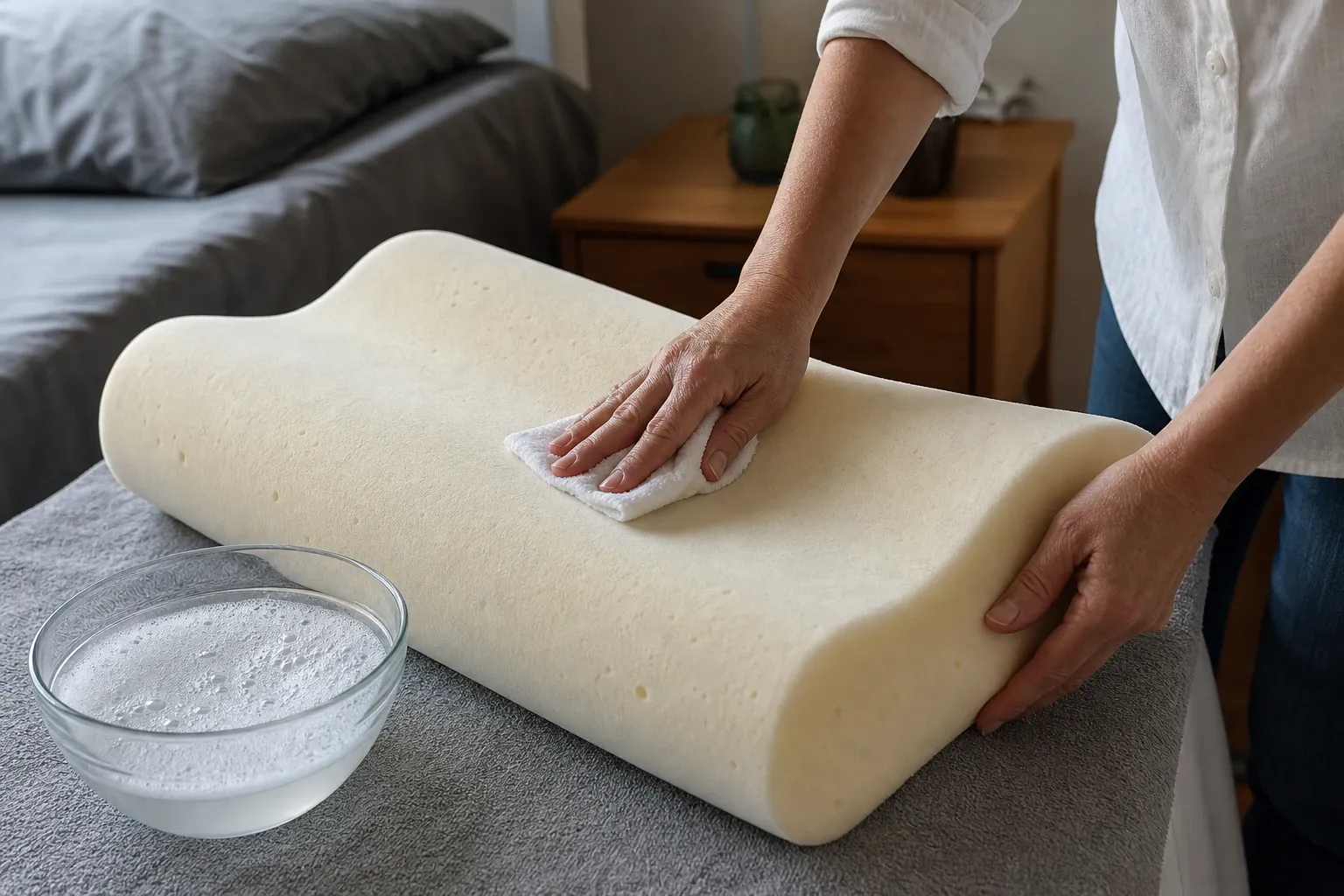
Care is simple:
- Spot-clean foam with a damp cloth and mild soap, then let it dry fully.
- Wash removable covers as the label says. Derila Ergo’s cover is machine wash warm.
- Air the pillow out now and then, away from direct heat.
- Never machine-wash a solid foam core unless the label allows it.
Before you buy any pillow, read the trial period and the return rules, including who pays return shipping. And keep every pillow out of a baby’s sleep area, as Safe to Sleep guidance advises.
Quick checklist before you buy
A good orthopedic pillow choice comes down to a few checks:
- Your main position: side, back, stomach or a mix
- Loft that matches your shoulder width and mattress
- Firmness you like: slow-sinking foam or bouncy latex
- A removable, washable cover
- Price per pillow, worked out for the pack you need
- Return window, condition rules and return shipping costs
Where this fits in our pillow guides
Choosing an orthopedic pillow is one part of getting comfortable at night, and our main guide, Pillows and Neck Comfort: A Practical Guide, pulls the whole picture together. It covers sleeping positions, pillow types and daily habits.
If a sore neck is your main worry, our guide to pillows for neck pain explains what to look for and when a doctor should come first.
Our pick for most readers
Derila Ergo is our pick for most back and side sleepers who want a contoured orthopedic pillow. It brings a shaped design, a washable cooling cover, a price as low as $37.49 per pillow in the family pack and a 60-day return window.
If you sleep on your stomach or have very wide shoulders, an adjustable option like the Saatva Latex Pillow may suit you better. And if your neck pain lingers or spreads, see a doctor before you buy anything.
Check the current Derila Ergo price and the return terms on the official site.
See Derila Ergo on the official site60-day money-back guarantee
Questions readers ask
Do cooling covers really keep a pillow cooler?
A breathable cooling cover can let air and moisture move more easily than a thick, tight cover, which some warm sleepers notice. How much cooler it feels depends on the fabric, the foam under it and your room. Treat terms like ‘active cooling’ as the maker’s claim and keep your bedroom cool too.
Does an orthopedic pillow need a firm mattress?
No, but your mattress changes the height you need. On a soft mattress your shoulder and hips sink further, so a slightly lower pillow may keep your head level. On a firm mattress you sink less and may need more loft. Test the pillow on the bed you actually sleep on.
Can I stack two regular pillows instead of buying an orthopedic pillow?
You can, and some side sleepers find it works. The downside is that stacked pillows shift and squash during the night, so the height may not stay steady. A pillow made at the right height, or an adjustable one, usually holds its shape better. Check that your chin stays level either way.